
 English
 Deutsch
 Español
 中文简体



Ask ten materials engineers about single walled carbon nanotubes and you will hear ten different reasons why they matter: a tensile strength that rivals diamond, thermal conductivity above copper, or an electronic band structure that shifts simply by rolling a graphene sheet a little tighter. What most people agree on is that SWCNTs are far easier to admire than to handle. After years of supplying ionic liquids to laboratories and factories working with these materials, we keep hearing the same three practical questions: what exactly are they, why do they clump together, and how do you persuade them to behave inside a real formulation? This guide answers those questions without the hype.
Content
- 1 What a Single-Walled Carbon Nanotube Really Is
- 2 Properties That Make SWCNTs Interesting
- 3 How Single-Walled Carbon Nanotubes Are Produced
- 4 The Dispersion Problem, and Where Ionic Liquids Fit
- 5 Where Single-Walled Carbon Nanotubes Are Actually Used
- 6 Safety, Handling and Regulatory Notes
- 7 Specifying and Sourcing SWCNTs Without Wasting Money
What a Single-Walled Carbon Nanotube Really Is
Take a sheet of graphene one atom thick and roll it into a seamless cylinder. That is the essential picture of a single-walled carbon nanotube: a hollow tube whose wall is exactly one layer of sp2-bonded carbon atoms, with a diameter typically between 0.4 and 2 nanometres and a length that can reach into the millimetre range. The aspect ratio that results is among the highest of any manufactured material, frequently exceeding 1,000 to 1.
The direction in which the graphene sheet is rolled, its chirality, is described by a pair of integers (n, m) and it determines almost everything about how the tube behaves:
- Armchair nanotubes (n = m) behave like metals and conduct electricity very well.
- Zigzag nanotubes (m = 0) are usually semiconducting.
- Chiral nanotubes, the largest group of possible structures, can be either metallic or semiconducting depending on their exact indices.
In a typical as-produced sample, roughly two-thirds of the tubes are semiconducting and one-third metallic. That mixture is precisely why electronic-grade SWCNTs remain so expensive: separating tubes by chirality is far harder than making them in the first place.
Properties That Make SWCNTs Interesting
The table below summarises the practical differences between single-walled and multi-walled carbon nanotubes. Treat the figures as indicative ranges rather than specifications, because real values depend on chirality, diameter, defect density and how thoroughly the sample was purified.
| Property | Single-walled (SWCNT) | Multi-walled (MWCNT) |
|---|---|---|
| Wall structure | One graphene layer | Several concentric layers |
| Typical diameter | 0.4 to 2 nm | 5 to 50 nm |
| Aspect ratio | Often above 1,000 | Typically 100 to 1,000 |
| Electrical behaviour | Metallic or semiconducting, set by chirality | Largely metallic-like, weak chirality dependence |
| Thermal conductivity | Extremely high for individual tubes | High, but generally lower |
| Tensile strength | Among the highest measured | High |
| Dispersion difficulty | Very high, strong bundling | Moderate |
| Cost per gram | Much higher | Lower |
For composites and coatings, the appeal is conductivity at very low loading: a well-dispersed network of SWCNTs can make a polymer conductive at fractions well below what carbon black requires. For structural use, the challenge is transferring the strength of an individual tube into a bulk material, which is a dispersion and interfacial problem rather than a synthesis one.
How Single-Walled Carbon Nanotubes Are Produced
Four routes dominate the literature and the supply chain, and each one leaves its own fingerprint on the final powder:
- Arc discharge, where carbon is evaporated between graphite electrodes in a plasma; it produces high-crystallinity tubes but in modest quantities.
- Laser ablation, which gives good quality with tight diameter distribution, at a cost that limits it to research and high-value electronics.
- Chemical vapour deposition, the industrial workhorse, using iron, cobalt or nickel catalysts in processes such as HiPco and CoMoCAT to grow tubes from carbon-containing gas.
- Template and epitaxial growth, used mainly to study chirality control rather than for bulk production.
Every high-volume route leaves residual metal catalyst behind, so purification steps such as acid reflux, oxidation and centrifugation are part of the product specification, not an afterthought. Those same steps introduce defects, which is why buyers should always ask for the purification method alongside the purity number.
The Dispersion Problem, and Where Ionic Liquids Fit
Pristine SWCNTs are insoluble in water and in most organic solvents. Van der Waals attraction pulls them into ropes and bundles, and once bundled they are extremely hard to separate again without breaking the tubes and losing the properties you paid for.
The traditional answers are surfactants such as SDS and SDBS, or wrapping polymers. Both work, but both leave an insulating layer around the tube, which is unwelcome in conductive formulations. Ionic liquids offer a third route. Imidazolium-based salts interact with the graphene surface through cation-pi interactions, wetting the tubes and stabilising them as individual objects with far less insulating residue. If the chemistry is new to you, our explanation of why ionic liquids are considered a game-changing class of materials is a useful starting point.
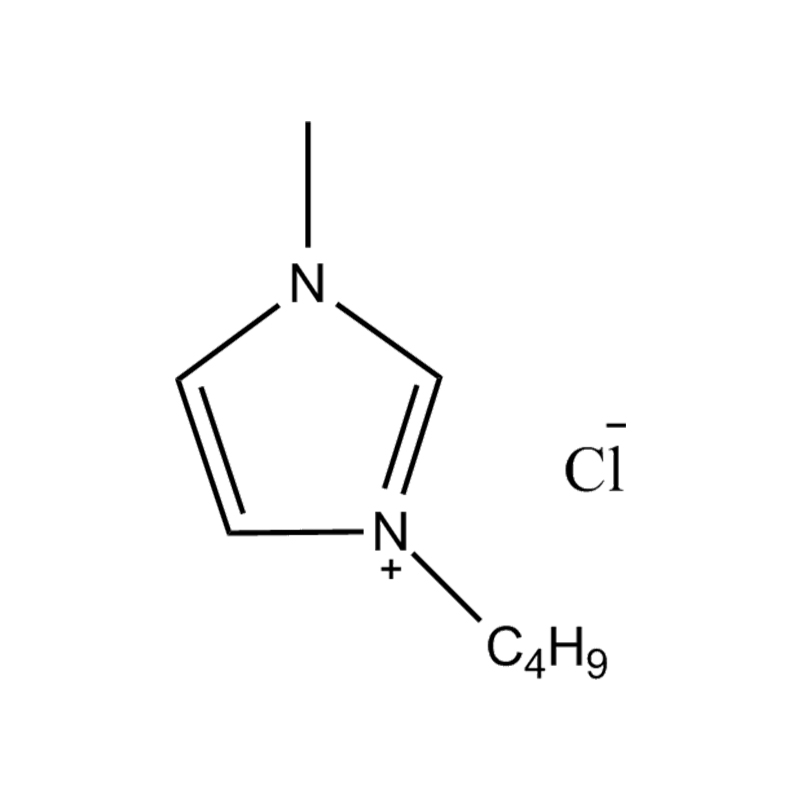 1-Butyl-3-methylimidazolium Chloride Ionic Liquid, 99% PurityThis 99% purity imidazolium chloride ionic liquid is a candidate for screening dispersion formulations, with reported conductivity, viscosity and thermal decomposition data.View Product →
Because ionic liquids are designable, you choose the cation, the anion and the purity level, the surface chemistry can be tuned to the polymer, solvent or electrolyte you are working with. That flexibility is why they appear in so many dispersion studies, and why we usually recommend starting with a small screening set rather than a single salt.
Where Single-Walled Carbon Nanotubes Are Actually Used
Commercial interest clusters into a handful of areas, some mature and some still finding their footing:
- Conductive and static-dissipative composites for films, tapes, packaging and textiles.
- Energy storage, including conductive additives in lithium-ion electrodes, supercapacitors and solid-state electrolyte research.
- Electronics and sensing, from transparent conductive films and transistors to strain and gas sensors.
- Structural composites in aerospace, sporting goods and tires, where stiffness and fatigue resistance matter more than cost per kilogram.
- Biomedical and environmental research, including biosensors, membranes and drug-delivery studies.
The oldest commercial use is static control, where a small addition of nanotubes replaces a much larger loading of carbon black. Our overview of antistatic agents explains how that kind of conductive network is designed for plastics, textiles and electronics.
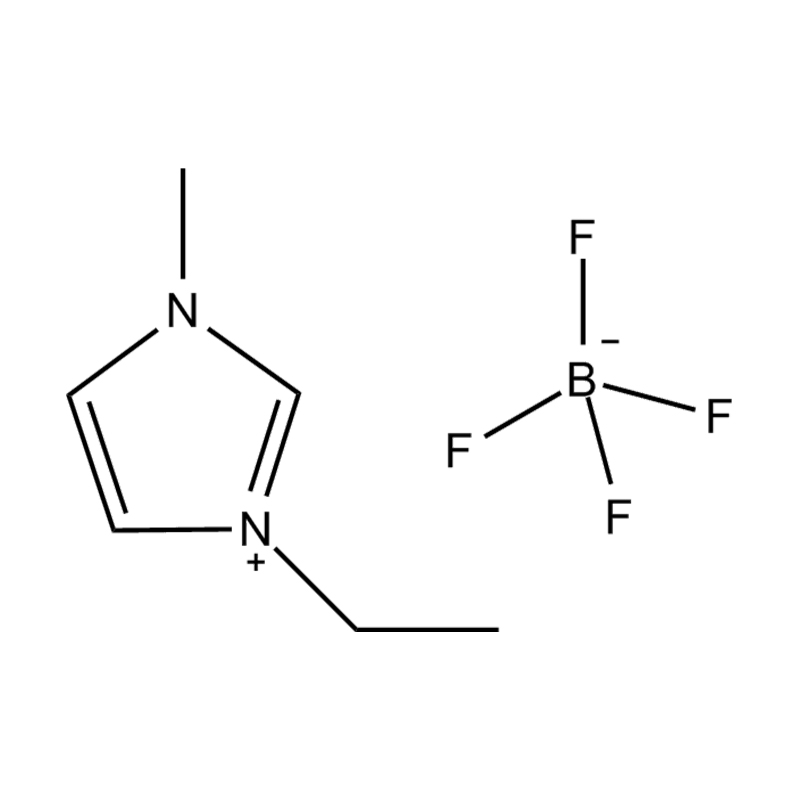 1-Ethyl-3-methylimidazolium Tetrafluoroborate Room-Temperature Ionic LiquidA room-temperature ionic liquid supplied at 99% purity, with reported conductivity and viscosity, relevant to electrolyte and electrochemical evaluations.View Product →
In batteries and supercapacitors, nanotubes are usually paired with an electrolyte system rather than used alone. Ionic liquids such as 1-ethyl-3-methylimidazolium tetrafluoroborate are frequently evaluated in those formulations because of their wide electrochemical window and negligible volatility.
Safety, Handling and Regulatory Notes
As-produced SWCNTs are a fine, respirable powder, which is the reason they attract more attention from safety officers than their tonnage would suggest. The published concern centres on pulmonary effects from inhaled dust, and the practical rules in industry are consistent:
- Handle dry powder only in a fume hood or glovebox, with appropriate respiratory protection.
- Prefer supplied dispersions, pastes or masterbatches, which sharply reduce airborne exposure.
- Treat tubes embedded in a cured polymer matrix as low risk, since they are immobilised.
- Follow local disposal and notification requirements, as registration obligations differ by region and continue to evolve.
Ecotoxicity data is still limited, so the sensible approach is containment first and optimism second.
Specifying and Sourcing SWCNTs Without Wasting Money
Two powders with the same purity figure can behave completely differently in your process, so it pays to ask precise questions:
- Carbon purity and the residual catalyst metal content, reported separately.
- Diameter distribution and any chirality selectivity that has been achieved.
- Length and bundling state: as-produced ropes, or already dispersed and stabilised.
- Functionalisation, for example carboxyl or hydroxyl groups, and how it affects conductivity.
- Delivery format, whether dry powder, solvent dispersion or masterbatch.
If what you actually need is the medium rather than the tubes, we can match cation, anion and purity to your process instead of asking you to adapt to a catalogue item.
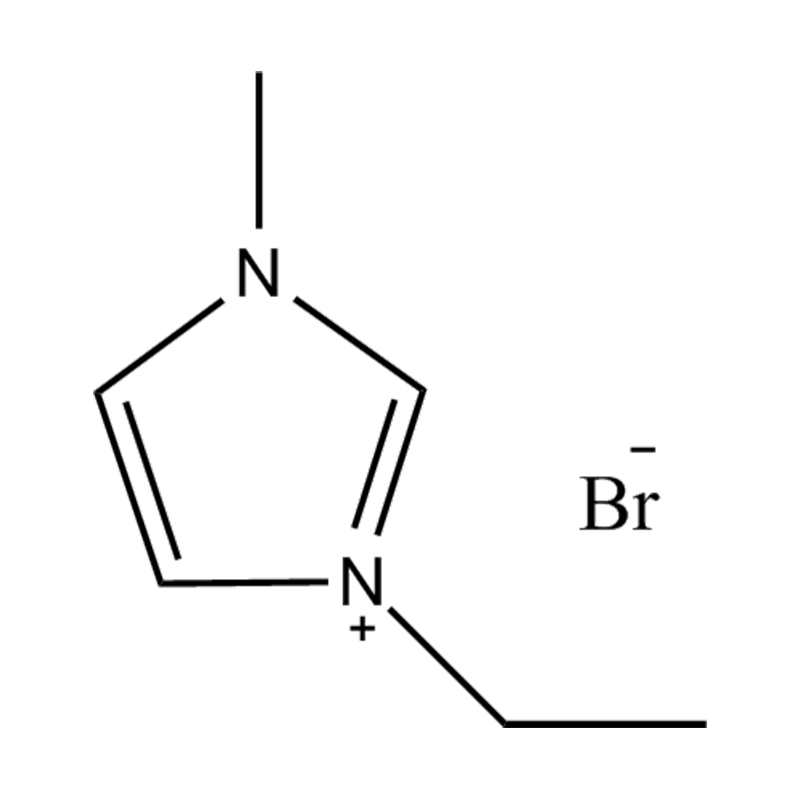 Industrial Ionic Liquids by Cation and Functional FamilyA customizable industrial ionic liquid range organized by cation, anion and purity, useful when selecting a medium for dispersions, electrolytes or conductive formulations.View Product →
Single walled carbon nanotubes reward patience. Get the dispersion right and they deliver conductivity, strength and thermal performance that few other additives can match; get it wrong and you are left with expensive black clumps. We have been working with ionic liquids since 2009, and most of that experience has been about helping customers turn difficult materials into workable formulations. If you are building a dispersion, an electrolyte or a conductive coating around SWCNTs, we are glad to compare notes on the chemistry.