
 English
 Deutsch
 Español
 中文简体
中文简体



Benzyl chloride announces itself before you ever see the liquid: the vapor carries a pungent, aromatic odor and acts as a powerful tear-inducing irritant at very low airborne levels. That is only the first warning a benzyl chloride SDS has to deliver. The essential picture is this: benzyl chloride (CAS 100-44-7) is a toxic, corrosive chemical intermediate whose vapors can form explosive mixtures with air above 67°C (153°F), and it is sold in stabilized form because it polymerizes in contact with most common metals while releasing corrosive hydrogen chloride fumes.
This guide summarizes what a compliant SDS contains, which values deserve the closest reading, and how those numbers translate into storage, handling and procurement decisions.
Content
- 1 What a Benzyl Chloride SDS Must Identify
- 2 Hazard Classification and Health Effects
- 3 Physical and Chemical Properties to Verify
- 4 Stability and Reactivity: Why Storage Details Matter
- 5 Handling, Storage and Exposure Controls
- 6 Spill Response, First Aid and Transport
- 7 Using the SDS in Procurement
- 8 From SDS to Synthesis: Benzyl Chloride and Ionic Liquids
What a Benzyl Chloride SDS Must Identify
A GHS-format benzyl chloride SDS runs through sixteen sections, from identification through transport and regulatory information. The identification block should pin the material down precisely: benzyl chloride, also listed as alpha-chlorotoluene, (chloromethyl)benzene or tolyl chloride, with CAS number 100-44-7, EC number 202-853-6, formula C7H7Cl and a molecular weight of 126.6. The composition section should state that the product is supplied stabilized, and ideally name the stabilizer. That word is not decorative: safety references treat unstabilized storage as unacceptable, because decomposition feeds the polymerization and fume-release problems described later in the sheet. A missing stabilizer identity is worth a question before the first order.
Hazard Classification and Health Effects
Treat benzyl chloride as hazardous by every exposure route, because it is. Supplier SDSs typically classify it with acute oral toxicity, skin corrosion or irritation, serious eye damage or irritation, skin sensitization, acute inhalation toxicity, and organ damage from repeated exposure, producing label warnings such as "may cause an allergic skin reaction" and "may cause damage to organs through prolonged or repeated exposure." Exact category numbers vary slightly between regions and suppliers, so read the classification block on your own document rather than copying from another source.
The symptom summaries explain why. Inhalation brings a burning sensation, cough, nausea, headache, shortness of breath and dizziness. Skin contact causes redness and pain, and the substance may be absorbed through the skin, which makes gloves and protective clothing mandatory rather than advisory. Eye exposure is the most acute concern: watering, redness, pain, blurred vision and potentially severe burns, since the vapor alone can injure eyes before any liquid contact occurs. Ingestion leads to abdominal pain, diarrhea, vomiting and a burning sensation. OSHA's chemical listing assigns an NFPA health rating of 3, marking a severe acute hazard.
Toxicology sections add the longer-term view: significant exposure is linked to central nervous system effects including unconsciousness, and to kidney and liver damage. Many SDSs also carry carcinogenicity warnings reflecting the IARC Group 2A classification of alpha-chlorinated toluenes, the chemical family that includes benzyl chloride, as probably carcinogenic to humans. Engineering controls come first; personal protective equipment is the second line of defense.
Physical and Chemical Properties to Verify
Section 9 is where copy-paste errors surface, so cross-check a few values against published reference data:
| Property | Typical SDS entry | Practical implication |
|---|---|---|
| Appearance | Colorless to slightly yellow liquid with a pungent, aromatic odor | Irritation and tearing occur at very low airborne levels |
| Molecular weight | 126.6 (C7H7Cl) | Cross-check against CAS 100-44-7 to confirm identity |
| Boiling point | 179°C (354°F) | Heated transfer requires deliberate vapor control |
| Flash point and LEL | 67°C (153°F); LEL 1.1% | Above 67°C, explosive vapor-air mixtures can form |
| Relative density | 1.1 (water = 1) | Slightly heavier than water |
| Vapor density | 4.4 (air = 1) | Vapor sinks and pools; floor-level ventilation is specified |
| Vapor pressure | 120 Pa at 20°C | Evaporates steadily at room temperature |
| Water solubility | 0.05% | Practically insoluble; spills are not diluted away |
Stability and Reactivity: Why Storage Details Matter
If you read one section closely, make it stability and reactivity. Benzyl chloride polymerizes under the influence of all common metals except nickel and lead. The reaction releases corrosive hydrogen chloride fumes and creates a fire or explosion hazard, which means an ordinary steel drum or fitting is not neutral hardware but a potential reaction initiator. In practice, receive and store the material in its original stabilized container, keep it away from metal dusts and swarf, and specify nickel or lead-compatible equipment where contact is unavoidable.
The same section warns that the liquid reacts vigorously with strong oxidants and attacks many metals in the presence of water. It is combustible, and combustion produces toxic, corrosive hydrogen chloride fumes, so firefighters use powder, foam or carbon dioxide while cooling containers with water spray. Above 67°C, explosive vapor-air mixtures can form, which is why the standing instruction is to use closed systems and ventilation once that temperature is approached.
Handling, Storage and Exposure Controls
Storage guidance for benzyl chloride is unusually specific, and every line traces back to the properties above:
- Store only stabilized material, kept dry and well ventilated, with ventilation arranged along the floor because the vapor is far denser than air.
- Keep it separated from food and feedstuffs, from oxidants and from other incompatible materials.
- Keep handling temperatures below 67°C; above that threshold, use closed systems with ventilation.
- Provide local exhaust ventilation or breathing protection during open handling, plus protective gloves, protective clothing and safety goggles.
- Do not eat, drink or smoke in work areas, and wash hands before breaks.
Because the vapor is a fast-acting lachrymator, containment beats personal protection: closed transfer and local exhaust protect the whole crew, while goggles and respirators protect only the wearer, and only if worn correctly.
Spill Response, First Aid and Transport
Spill instructions assume a serious scenario: recommended personal protection is a chemical protection suit with self-contained breathing apparatus. The liquid must not be allowed to enter the environment. Collect it in covered, non-metallic containers, absorb remaining traces with sand or an inert absorbent, and dispose of everything according to local regulations.
| Route | Warning signs | First response |
|---|---|---|
| Inhalation | Burning sensation, cough, nausea, headache, shortness of breath, dizziness | Fresh air and rest; keep the person half-upright and refer for medical attention |
| Skin contact | Redness and pain; the substance may be absorbed through skin | Remove contaminated clothing and rinse with plenty of water or shower; seek medical attention |
| Eye contact | Watering, redness, pain, blurred vision; risk of severe deep burns | Rinse with plenty of water for several minutes, removing contact lenses if easily possible, then get medical attention |
| Ingestion | Abdominal pain, diarrhea, vomiting, burning sensation | Rinse mouth and refer for medical attention |
Transport classification is unambiguous: UN 1738, hazard class 6.1 (toxic), subsidiary risk class 8 (corrosive), packing group II, and a prohibition on transport together with food and feedstuffs. Confirm that a supplier's labels, transport documents and SDS section 14 all carry the same codes, because mismatches usually indicate an outdated or adapted document.
Using the SDS in Procurement
Before signing off on a purchase, five checks take ten minutes and prevent most documentation problems:
- Confirm the CAS number reads 100-44-7 and the chemical name matches benzyl chloride; the synonym alpha-chlorotoluene invites confusion with related chlorinated toluenes that are different chemicals with different hazards.
- Check that the product is described as stabilized and that the stabilizer appears in the composition section.
- Compare the GHS classification in section 2 with the transport description in section 14; internal inconsistencies are a red flag.
- Cross-check section 9 values, including flash point 67°C, vapor density 4.4 and molecular weight 126.6, against published reference data.
- Note the revision date and the issuing legal entity, and make sure the entity matches the company actually selling the material.
From SDS to Synthesis: Benzyl Chloride and Ionic Liquids
For many users, benzyl chloride matters as a building block rather than an end product. In ionic liquid chemistry it serves as a benzylating agent: reacted with N-methylimidazole, it forms 1-benzyl-3-methylimidazolium chloride, which can then undergo anion exchange to give salts such as the tetrafluoroborate. Every rule in the SDS applies directly on the synthesis floor, since dry, stabilized feedstock, non-reactive equipment and closed handling protect operators and product quality alike, and degraded benzyl chloride contaminates a quaternization batch with chloride and polymer byproducts.
1-benzyl-3-methylimidazole tetrafluoroborate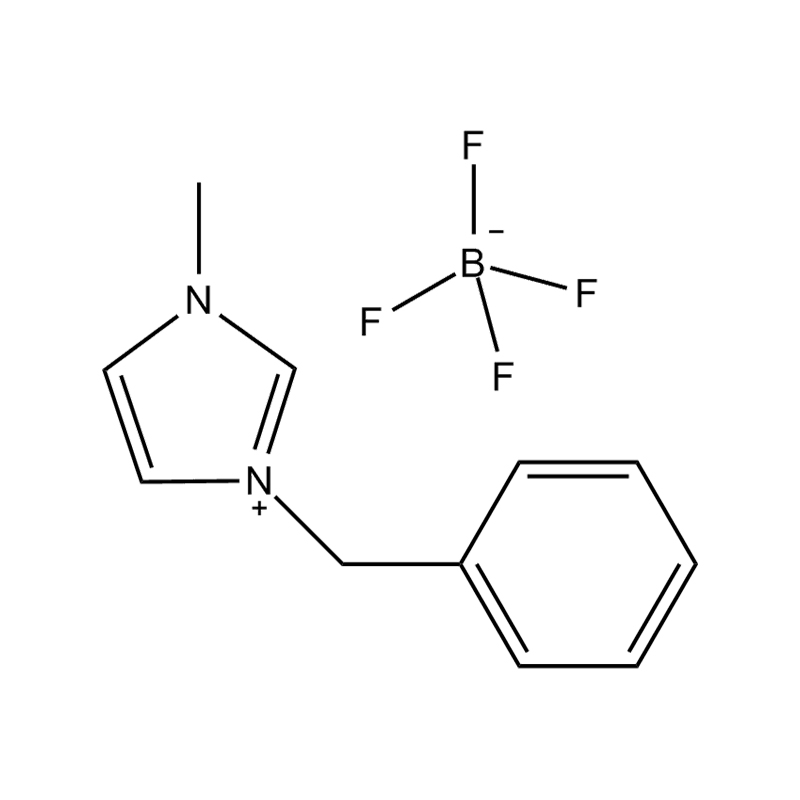 1-Benzyl-3-Methylimidazolium Tetrafluoroborate Ionic Liquid[BzMIM][BF4] is an imidazolium ionic liquid whose benzyl substituent adds hydrophobic, π-π interacting character, while the weakly coordinating BF4 anion offers thermal and electrochemical stability. It suits solvent and multiphase catalysis uses, including the quaternization chemistry discussed here.View Product →
Producers running this chemistry at scale build their safety habits on the same document. LETD (Zhejiang Ldet Energy Technology), an ionic liquid manufacturer operating since 2009, supplies a dedicated benzyl ionic liquid product range and manufactures the paired cation and anion combinations behind it under controlled, documented conditions.
benzyl ionic liquids product rangeBenzyl Ionic Liquids: Custom Synthesis and SupplyLETD, producing ionic liquids since 2009, manufactures 1-benzyl-3-alkylimidazolium salts with chloride, bromide, BF4, PF6 or TFSI anions under controlled, documented conditions. When catalog products don't fit a project, custom synthesis with SDS-grade documentation is available.View Product →
When a catalog product does not fit the project, the practical route is custom synthesis of benzyl ionic liquids, with safety documentation, including an SDS-grade data sheet for the finished salt, requested as part of the specification rather than after delivery.
An SDS rewards readers who know where to look. For benzyl chloride, the decisive lines are the 67°C flash point, the vapor density of 4.4 that dictates floor-level ventilation, the polymerization risk with all common metals except nickel and lead, and the UN 1738, class 6.1 (8), packing group II transport code. Check those four against every new revision, and the sixteen sections stop being paperwork and become an operating manual.
The same habit carries over to the chemistry built on benzyl intermediates. If your supply feeds ionic liquid or additive projects, reviewing a supplier's application portfolio, from antistatic agents to separation and recycling chemistries, is a sensible way to judge how their documentation and quality systems hold up across products.