
 English
 Deutsch
 Español
 中文简体
中文简体



You have just run a gradient method that worked perfectly last week. The calibration standards look clean, but the sample chromatogram shows an extra peak at 23.8 minutes. You replace the column, prepare fresh buffer, and check the detector. The peak is still there. Then you exchange the water going into the mobile phase, and the artifact disappears. That is the reality of high performance liquid chromatography: water purity sits underneath every separation, and when it changes, the method changes with it.
Water purity affects HPLC data quality in four practical ways: baseline stability, peak shape, retention reproducibility, and instrument lifetime. The contaminants involved may be organic molecules, dissolved ions, particles, or microbes. Even a small amount of one kind of impurity can produce consequences out of proportion to its concentration.
Content
- 1 The Main Effects of Water Purity on HPLC
- 2 What "HPLC-Grade" and Type 1 Water Actually Mean
- 3 Gradient Elution Makes Water Impurities Visible
- 4 Daily Habits That Protect Water Purity
- 5 Additives Turn a Water Problem into a Method Problem
- 6 Purity Starts With the Supplier
- 7 Treat Water as Part of the Method
The Main Effects of Water Purity on HPLC
In an HPLC system, water is a reagent, not a passive background. It carries the buffer, dissolves the sample, and contributes to the detector background. Impurities in water therefore move directly into the analytical signal. The table below summarizes the most common contaminants and their effects.
| Contaminant | Examples or Source | Effect in HPLC |
|---|---|---|
| Dissolved organics | Humic substances, plasticizers, cleaning residues, solvent vapors | UV-absorbing ghost peaks, baseline drift, retention changes |
| Inorganic ions | Sodium, chloride, silicate, trace metals | Conductivity changes, interference in ion chromatography and LC-MS, metal-related peak broadening |
| Particulates | Resin fines, dust, precipitates | Blocked frits, rising backpressure, pump seal wear, noisy baseline |
| Dissolved gases | Oxygen, carbon dioxide, nitrogen | Bubbles in the detector, baseline spikes, pH drift |
| Microorganisms | Bacteria and biofilms in storage containers | Column fouling, clogged frits, spurious peaks, method instability |
These effects are not only theoretical. A microbial biofilm in a water reservoir can release UV-absorbing metabolites, and once that film forms, simply replacing the water may not solve the problem until the reservoir is cleaned and sanitized.
What "HPLC-Grade" and Type 1 Water Actually Mean
Most analytical methods call for water that meets Type 1 specifications. In practical terms, that means resistivity at 25 degrees Celsius is about 18.2 megohm-centimeters, conductivity is near 0.055 microsiemens per centimeter, and total organic carbon is low enough that the water does not create a visible UV or MS background. Resistivity alone is not enough. You also need to know the TOC level, particle count, and, in some applications, silicate or sodium values.
The pH of purified water is not a useful specification. Ultrapure water has almost no buffering capacity, and it quickly absorbs carbon dioxide from the air, so a measured pH around 5.6 simply reflects dissolved CO2. The pH that matters is the pH of the buffered mobile phase you prepare.
Water quality requirements also depend on the detector. UV detection at 210 nm is especially sensitive to organic contamination because many carbon-oxygen and carbon-nitrogen bonds absorb there. LC-MS needs water with very low nonvolatile impurities to avoid ion suppression and adduct formation. Evaporative detectors are similarly affected by nonvolatile contamination because it raises the background signal. Type 1 water is therefore a sound starting point for almost every HPLC application.
Bottled HPLC-grade water can work, but it has to be stored and handled correctly. Check the certificate of analysis, record the lot number, and never assume that an old container is free of biological growth.
Gradient Elution Makes Water Impurities Visible
Water impurities are most visible in gradient methods. In an isocratic run, a UV-absorbing contaminant may simply raise the baseline a little. In a gradient, the water fraction starts high and the organic solvent fraction rises over time. Contaminants can be retained at the head of the column and then eluted as the organic content increases. This produces ghost peaks and a drifting baseline that can interfere with integration and quantitation.
That is why a blank gradient is one of the simplest checks for water quality. Run your exact gradient without injecting a sample. If peaks appear in the blank, the mobile phase is suspect.
Daily Habits That Protect Water Purity
Pure water does not stay pure by accident. The following habits prevent the most common problems in HPLC practice.
- Use water from a purification system with fresh cartridges, a working UV lamp, and regular sanitization.
- Collect water into a clean, capped container. Do not leave the container open while the system runs.
- Do not store water for days. Prepare the mobile phase with fresh water on the same day whenever possible.
- Avoid adding fresh water to a partially filled reservoir. Replace the reservoir contents instead of topping them up.
- Run a blank gradient at the wavelength used for analysis and record the result.
- Document resistivity, TOC, and the date of water collection in your analytical records.
For labs that use bottled water, the same rules apply. Check the expiration date, close the container immediately after use, and do not return unused water from a beaker to the bottle.
Additives Turn a Water Problem into a Method Problem
Mobile phases rarely contain water alone. Buffer salts, acids, ion-pair reagents, and some specialized modifiers are added at relatively low concentrations. If the water contains trace UV-absorbing impurities, those impurities may not change the buffer capacity, but they can still appear in the detector signal.
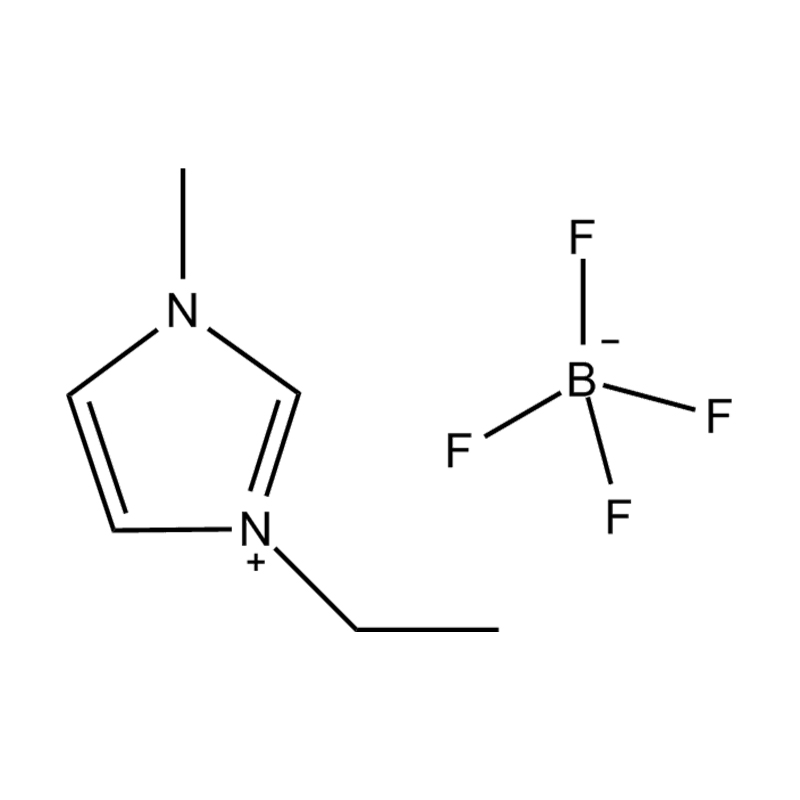
Ionic liquids are sometimes used as mobile phase modifiers to improve peak shape or selectivity. When you choose one, the same standard of purity should apply. For example, 1-ethyl-3-methylimidazolium tetrafluoroborate is a common ionic liquid for chromatographic studies. It should be dissolved in water that already meets Type 1 specifications; otherwise, the additive becomes another source of contamination. If you want to understand the separation-related properties of these compounds, our overview of how ionic liquids perform in separation processes covers the practical variables.
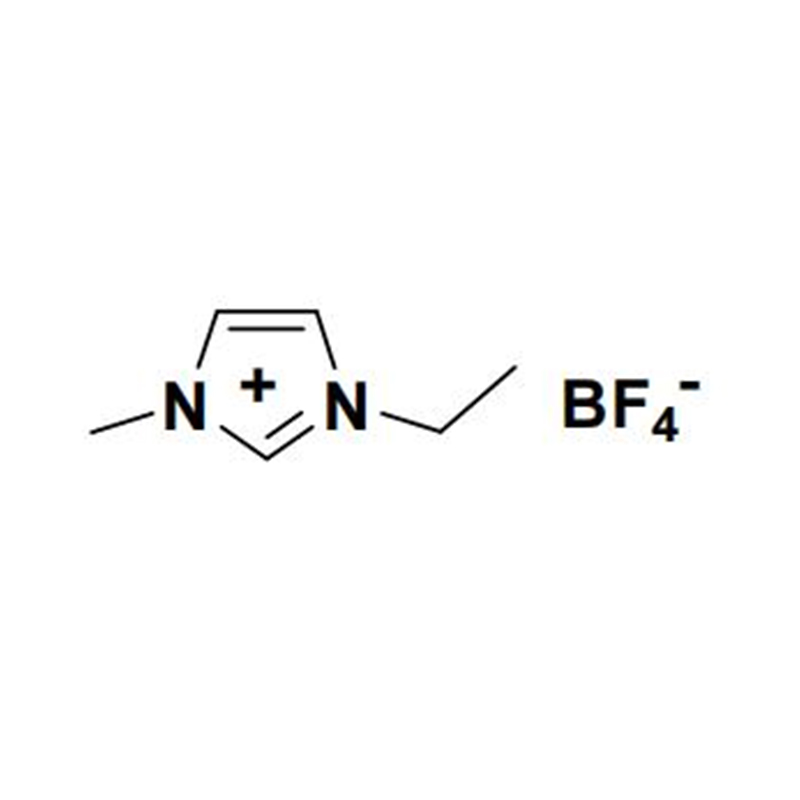 CAS:143314-16-3 -1 -Ethyl-3-methylimidazolium Tetrafluoroborate Liquids SupplierLdet Technology is China custom CAS:143314-16-3 -1 -Ethyl-3-methylimidazolium Tetrafluoroborate Liquids suppliers and 1 -Ethyl-3-methylim...View Product →
Purity Starts With the Supplier
At Zhejiang Ldet, we manufacture ionic liquids and specialty chemicals. We know from production that a trace impurity in a starting material can change downstream performance. That is why we check water content, residual halides, and UV behavior before release. The same discipline belongs in an HPLC lab: choose materials that come with documented specifications. For example, 1-butyl-3-methylimidazolium tetrafluoroborate is available with purity data that lets you assess whether it is compatible with your detection method.
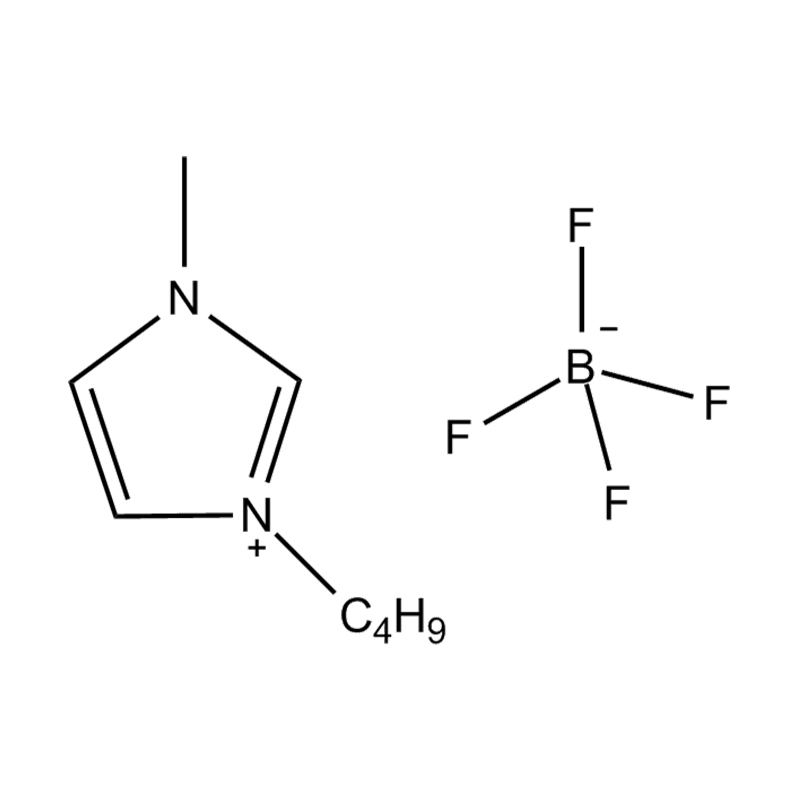 CAS: 174501-65-6-1-Butyl-3-methylimidazolium tetrafluoroborate Liquids SuppliersLdet Technology is China custom CAS: 174501-65-6-1-Butyl-3-methylimidazolium tetrafluoroborate Liquids suppliers and 1-Butyl-3-methylimid...View Product →
What to Check on a Certificate of Analysis
- Residual halide content, because halides can affect ion-exchange separations and corrosion.
- Water content, because water changes the effective concentration of the additive.
- A UV spectrum or UV cutoff, so you can predict background absorbance.
- Lot-to-lot consistency, because a new lot should not silently change your method.
If you need help matching a material to a method, you can discuss purity data and custom requirements with our technical team.
Treat Water as Part of the Method
Water purity in HPLC is not a one-time setup. It is a daily variable that can change with the season, the storage bottle, and the condition of the purification system. Use Type 1 water, confirm TOC and resistivity, handle it properly, and choose additives with traceability. In a method built on nanograms of analyte, water is never "just water."