
 English
 Deutsch
 Español
 中文简体
中文简体



Content
- 1 Introduction to 1-Hydroxyethyl-3-methylimidazole Tetrafluoroborate
- 2 Chemical Structure and Molecular Characteristics
- 3 Physical and Chemical Properties
- 4 Synthesis and Production Considerations
- 5 Role in Electrochemical Applications
- 6 Applications in Catalysis and Chemical Processing
- 7 Use in Separation Technologies
- 8 Contribution to Green Chemistry Initiatives
- 9 Challenges and Technical Considerations
- 10 Future Research and Industrial Outlook
- 11 Conclusion
Introduction to 1-Hydroxyethyl-3-methylimidazole Tetrafluoroborate
1-Hydroxyethyl-3-methylimidazole tetrafluoroborate is an imidazolium-based ionic liquid that has attracted significant attention in chemical research and industrial development. As part of the broader family of ionic liquids, this compound combines a functionalized imidazolium cation with a tetrafluoroborate anion, creating a material that exhibits unique physicochemical properties. These properties include negligible vapor pressure, high thermal stability, excellent ionic conductivity, and favorable solvent characteristics.
Unlike conventional organic solvents, ionic liquids can be tailored through structural modifications to meet specific application requirements. The hydroxyethyl functional group present in 1-Hydroxyethyl-3-methylimidazole tetrafluoroborate contributes additional hydrogen-bonding capabilities, enhancing its versatility in chemical processing, electrochemistry, catalysis, and advanced material development.
As industries continue seeking sustainable alternatives to volatile organic compounds, ionic liquids such as 1-Hydroxyethyl-3-methylimidazole tetrafluoroborate are increasingly considered valuable components in next-generation technologies.
Chemical Structure and Molecular Characteristics
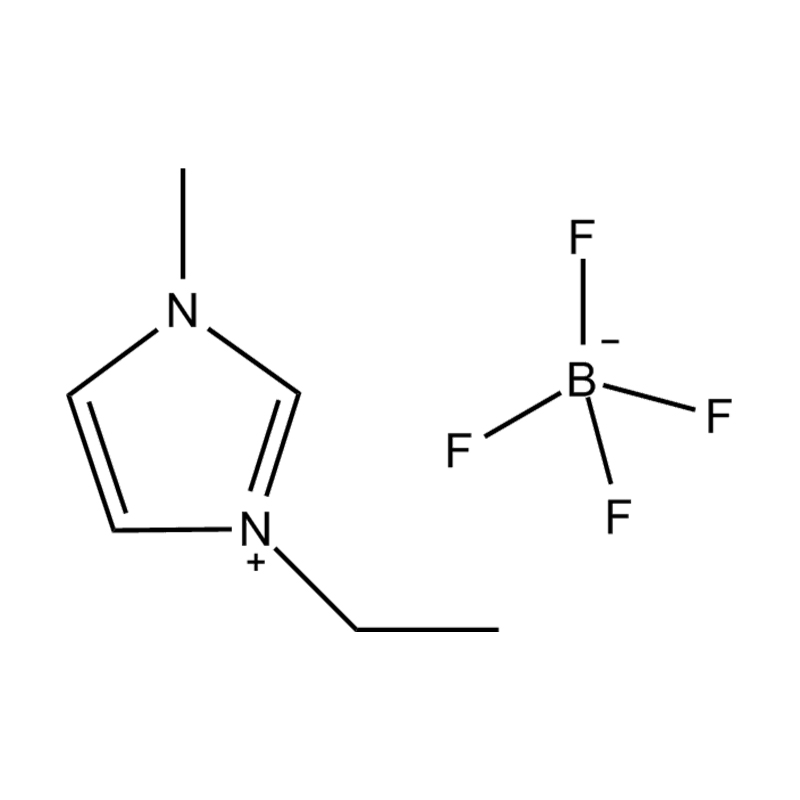
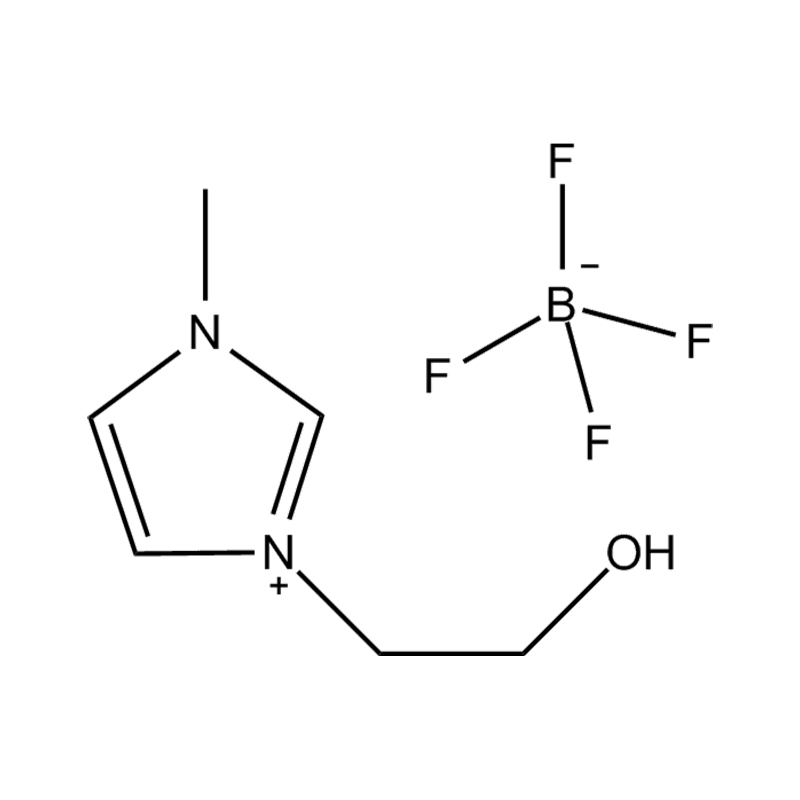
The molecular structure of 1-Hydroxyethyl-3-methylimidazole tetrafluoroborate consists of two primary components: the organic imidazolium cation and the inorganic tetrafluoroborate anion. The imidazolium ring serves as the ionic core, while the methyl and hydroxyethyl substituents influence the compound's physical and chemical behavior.
The hydroxyl group introduces polarity and hydrogen-bonding interactions, which can affect viscosity, solubility, and intermolecular interactions. Meanwhile, the tetrafluoroborate anion contributes to ionic conductivity and electrochemical stability, making the material suitable for a variety of technical applications.
Key Structural Features
- Imidazolium-based ionic framework.
- Hydroxyethyl functional group capable of hydrogen bonding.
- Tetrafluoroborate counterion providing ionic stability.
- Low volatility compared with conventional solvents.
- High tunability for specialized industrial applications.
Physical and Chemical Properties
The practical value of 1-Hydroxyethyl-3-methylimidazole tetrafluoroborate stems from its distinctive physical and chemical properties. These characteristics often outperform traditional molecular solvents in applications requiring thermal resilience, conductivity, and environmental control.
| Property | Industrial Significance |
| Low Vapor Pressure | Reduced emissions and safer handling |
| High Thermal Stability | Suitable for elevated temperatures |
| Ionic Conductivity | Useful in electrochemical systems |
| Strong Solvation Ability | Effective solvent for diverse compounds |
| Chemical Tunability | Adaptable to specialized applications |
These properties contribute to the growing interest in ionic liquids across industries that require advanced performance characteristics not readily achievable with traditional solvents or electrolytes.
Synthesis and Production Considerations
The synthesis of 1-Hydroxyethyl-3-methylimidazole tetrafluoroborate typically involves the preparation of the corresponding imidazolium salt followed by anion exchange processes to introduce the tetrafluoroborate ion. Careful control of reaction conditions is essential to achieve high purity and minimize impurities that could affect performance in demanding applications.
Typical Production Objectives
Manufacturers generally focus on achieving consistent product quality, high ionic purity, controlled water content, and stable physicochemical properties. Since ionic liquids are frequently used in electrochemical systems and catalytic environments, even minor contaminants can influence performance.
Advanced purification techniques such as vacuum drying, filtration, and controlled crystallization are commonly employed to ensure product reliability for industrial and laboratory applications.
Role in Electrochemical Applications
One of the most important application areas for 1-Hydroxyethyl-3-methylimidazole tetrafluoroborate is electrochemistry. Ionic liquids have become increasingly attractive as alternatives to conventional electrolytes due to their conductivity, thermal stability, and broad electrochemical windows.
The compound can function as an electrolyte component in devices where conventional solvents may present volatility or safety concerns. Its ionic nature allows efficient charge transport while maintaining operational stability under demanding conditions.
Potential Electrochemical Uses
- Energy storage systems.
- Electrochemical sensors.
- Electrodeposition processes.
- Supercapacitor development.
- Advanced battery research.
As energy technologies continue to evolve, ionic liquids remain a promising area of investigation for improving device efficiency and operational lifespan.
Applications in Catalysis and Chemical Processing
Catalytic systems often require specialized reaction environments capable of dissolving reactants, stabilizing intermediates, and facilitating product separation. 1-Hydroxyethyl-3-methylimidazole tetrafluoroborate offers several characteristics that make it attractive as both a solvent and reaction medium.
The hydroxyethyl functionality enhances intermolecular interactions, potentially influencing reaction kinetics and selectivity. Furthermore, the ionic nature of the compound can provide unique microenvironments that differ substantially from those found in traditional molecular solvents.
Advantages in Catalytic Systems
- Enhanced catalyst stability.
- Improved reaction selectivity.
- Reduced solvent evaporation.
- Potential catalyst recycling opportunities.
- Compatibility with various reaction pathways.
Use in Separation Technologies
Modern separation processes increasingly rely on selective solvents capable of distinguishing between chemically similar substances. Ionic liquids have demonstrated significant potential in extraction, purification, and separation technologies due to their adjustable polarity and solvating capabilities.
1-Hydroxyethyl-3-methylimidazole tetrafluoroborate may be employed in systems designed to separate organic compounds, metal ions, or specialty chemicals. The ability to tailor interactions through ionic liquid design provides a powerful tool for improving process efficiency.
Benefits for Separation Processes
Compared with conventional solvents, ionic liquids often offer lower volatility, greater selectivity, and improved recyclability. These characteristics can contribute to safer operations and reduced environmental impact.
Contribution to Green Chemistry Initiatives
The growing emphasis on sustainability has accelerated interest in alternative solvents and process technologies. Ionic liquids are frequently discussed within the context of green chemistry because of their low vapor pressure and potential to reduce emissions associated with volatile organic compounds.
While no chemical material is entirely free from environmental considerations, 1-Hydroxyethyl-3-methylimidazole tetrafluoroborate offers opportunities for designing more efficient and potentially less wasteful industrial processes. Its long service life and recyclability further enhance its attractiveness in sustainable manufacturing strategies.
Challenges and Technical Considerations
Despite numerous advantages, successful implementation of ionic liquids requires careful consideration of technical factors. Properties such as viscosity, moisture sensitivity, purification requirements, and application-specific compatibility must be evaluated before large-scale deployment.
Researchers and manufacturers often conduct extensive testing to optimize formulation parameters and ensure compatibility with existing equipment and operational conditions.
- Control of water content.
- Management of viscosity characteristics.
- Evaluation of long-term stability.
- Assessment of material compatibility.
- Cost-performance optimization.
Future Research and Industrial Outlook
Research involving 1-Hydroxyethyl-3-methylimidazole tetrafluoroborate continues to expand as scientists explore new opportunities in energy storage, advanced manufacturing, catalysis, materials science, and environmental technologies. Ongoing innovation in ionic liquid chemistry is expected to produce formulations with even greater efficiency and application-specific performance.
The increasing demand for high-performance materials, combined with sustainability goals and evolving industrial requirements, positions ionic liquids as important contributors to future technological developments. Functionalized imidazolium-based compounds remain among the most actively studied members of this growing chemical family.
Conclusion
1-Hydroxyethyl-3-methylimidazole tetrafluoroborate represents a versatile and technologically significant ionic liquid with applications spanning electrochemistry, catalysis, separation technologies, and sustainable chemical processing. Its unique combination of low volatility, thermal stability, ionic conductivity, and functionalized molecular structure makes it a valuable material for modern industrial and research environments. As innovation continues across advanced manufacturing and green chemistry sectors, this ionic liquid is expected to remain an important component in the development of next-generation processes and materials.