
 English
 Deutsch
 Español
 中文简体
中文简体



Content
- 1 Introduction to Tributyl Methyl Ammonium Chloride
- 2 Chemical Structure and Molecular Characteristics
- 3 Physical and Chemical Properties
- 4 Synthesis and Manufacturing Processes
- 5 Role as a Phase-Transfer Catalyst
- 6 Applications in Organic Synthesis
- 7 Use in Material Science and Specialty Formulations
- 8 Handling, Storage, and Quality Considerations
- 9 Future Outlook and Emerging Opportunities
- 10 Conclusion
Introduction to Tributyl Methyl Ammonium Chloride
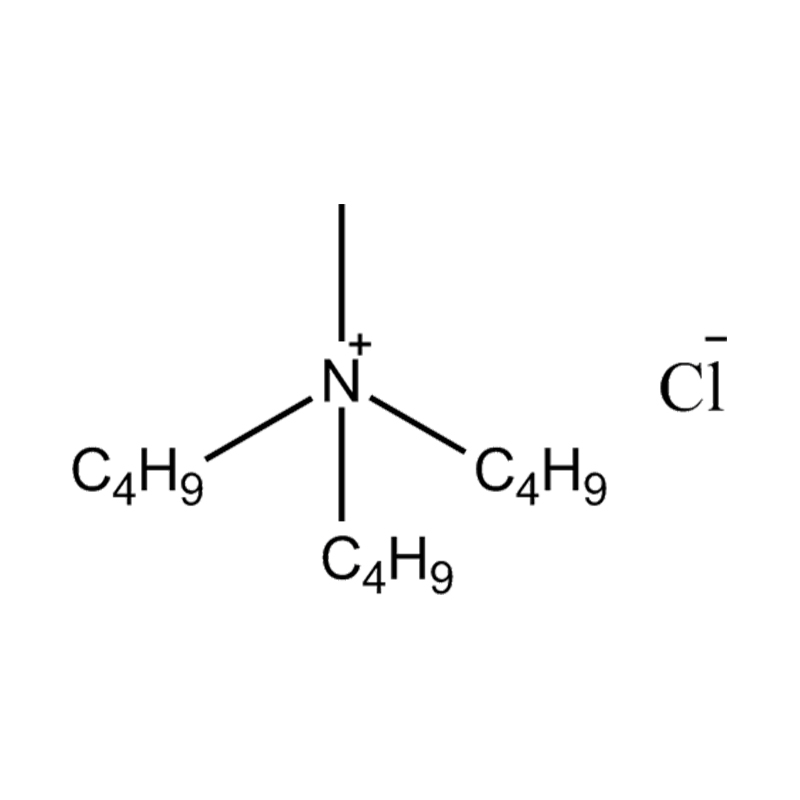
Tributyl methyl ammonium chloride is a quaternary ammonium compound widely used in chemical manufacturing, catalysis, material synthesis, and industrial processing. As a member of the quaternary ammonium salt family, it possesses a positively charged nitrogen atom bonded to one methyl group and three butyl groups, balanced by a chloride anion. This molecular structure provides a unique combination of solubility, stability, and phase-transfer capabilities that make it valuable across numerous industrial sectors.
The increasing demand for efficient and environmentally conscious chemical processes has elevated the importance of quaternary ammonium compounds. Tributyl methyl ammonium chloride is particularly attractive because it can facilitate reactions between substances that normally exist in different phases, improving reaction efficiency while reducing process complexity. Its versatility has led to widespread adoption in laboratories, specialty chemical production, and advanced manufacturing environments.
Understanding the properties, production methods, and practical applications of Tributyl methyl ammonium chloride is essential for chemists, engineers, and industrial decision-makers seeking effective solutions for modern chemical processing challenges.
Chemical Structure and Molecular Characteristics
The molecular structure of Tributyl methyl ammonium chloride plays a central role in determining its behavior and performance. The compound contains a quaternary nitrogen center carrying a permanent positive charge. Three butyl groups and one methyl group surround the nitrogen atom, creating a stable cation that pairs with chloride as the counterion.
Unlike amines, quaternary ammonium salts cannot lose their positive charge through proton transfer. This permanent ionic nature contributes to excellent stability under a wide range of operating conditions. The relatively large organic substituents also influence solubility characteristics, making the compound useful in systems involving both aqueous and organic phases.
Key Structural Features
- Quaternary ammonium cation with permanent positive charge.
- Three hydrophobic butyl groups.
- One methyl substituent for molecular balance.
- Chloride anion providing ionic neutrality.
- Excellent chemical and thermal stability.
These characteristics make the compound highly suitable for applications where ionic transport, phase compatibility, and reaction facilitation are required.
Physical and Chemical Properties
Tributyl methyl ammonium chloride exhibits several valuable physicochemical properties that contribute to its industrial utility. These properties influence its handling, storage, formulation, and performance in various chemical systems.
| Property | Industrial Importance |
| Ionic Character | Supports phase-transfer functions |
| Chemical Stability | Suitable for demanding reactions |
| Good Solubility | Compatible with multiple systems |
| Low Volatility | Safer handling and reduced emissions |
| Surface Activity | Useful in specialized formulations |
The combination of ionic and organic characteristics gives the compound unique behavior that bridges aqueous and non-aqueous environments, making it highly versatile for industrial use.
Synthesis and Manufacturing Processes
Tributyl methyl ammonium chloride is typically produced through quaternization reactions involving tributylamine and a suitable methylating agent. The reaction introduces the fourth organic substituent onto the nitrogen atom, creating the permanently charged quaternary ammonium structure.
Industrial production focuses on maximizing conversion efficiency while minimizing impurities. Careful control of reaction temperature, reagent purity, mixing conditions, and purification steps ensures a high-quality final product suitable for demanding applications.
Production Objectives
- High product purity.
- Consistent ionic composition.
- Minimal residual reactants.
- Reliable storage stability.
- Scalable manufacturing efficiency.
Advanced quality control procedures are often employed to verify composition, moisture content, and performance characteristics before commercial distribution.
Role as a Phase-Transfer Catalyst
One of the most significant applications of Tributyl methyl ammonium chloride is its use as a phase-transfer catalyst. Many chemical reactions involve reactants located in separate phases, such as water and organic solvents. Without assistance, these reactants may interact inefficiently, leading to slower reactions and reduced yields.
The compound functions as a molecular carrier, transporting reactive ions from one phase into another where the desired reaction can occur more readily. This capability often increases reaction rates, improves selectivity, and simplifies processing requirements.
Benefits in Phase-Transfer Catalysis
- Enhanced reaction efficiency.
- Improved product yields.
- Reduced reaction times.
- Lower energy consumption.
- Simplified process design.
Because of these advantages, phase-transfer catalysis remains one of the most important commercial uses for quaternary ammonium salts.
Applications in Organic Synthesis
Organic synthesis frequently requires efficient interaction between ionic reagents and organic substrates. Tributyl methyl ammonium chloride facilitates these reactions by improving reagent accessibility and transport across phase boundaries.
Researchers and manufacturers use the compound in numerous transformations, including substitution reactions, alkylation processes, oxidation systems, and specialty chemical production. Its ability to improve reaction conditions often results in cleaner processes and more efficient manufacturing workflows.
Common Synthetic Applications
The compound is often employed in fine chemical production, pharmaceutical intermediate synthesis, agrochemical manufacturing, and specialty material development. Its flexibility allows integration into a broad range of reaction environments.
Use in Material Science and Specialty Formulations
Beyond catalysis, Tributyl methyl ammonium chloride contributes to material science and formulation technologies. Its ionic nature and surface-active behavior make it useful in the preparation of specialized materials and functional systems.
Researchers investigate quaternary ammonium compounds for applications involving polymer modification, advanced coatings, surface treatment technologies, and ionic material development. In many cases, the compound enhances compatibility between different components within complex formulations.
Potential Material Applications
- Polymer processing systems.
- Surface modification technologies.
- Specialty coatings.
- Ionic material research.
- Advanced formulation development.
Handling, Storage, and Quality Considerations
Proper handling and storage practices are important for maintaining product quality and performance. Industrial users typically store Tributyl methyl ammonium chloride in tightly sealed containers under recommended environmental conditions to prevent contamination and moisture uptake.
Quality assurance procedures often include testing for purity, ionic composition, water content, and physical appearance. Consistent quality is especially important when the material is used in catalytic systems where impurities can affect reaction performance.
Best Practices
- Store in sealed containers.
- Protect from excessive moisture.
- Follow manufacturer handling guidelines.
- Verify product specifications before use.
- Implement appropriate quality control procedures.
Future Outlook and Emerging Opportunities
As chemical manufacturing continues evolving toward greater efficiency and sustainability, demand for high-performance catalytic and processing aids is expected to grow. Tributyl methyl ammonium chloride remains relevant because of its proven effectiveness in facilitating chemical reactions and improving industrial productivity.
Ongoing research explores new applications in advanced synthesis, green chemistry initiatives, functional materials, and process intensification technologies. The ability of quaternary ammonium salts to enhance reaction performance while reducing operational complexity makes them attractive candidates for future innovation.
Emerging industrial sectors may further expand the role of Tributyl methyl ammonium chloride, particularly in applications requiring efficient ion transport, phase compatibility, and specialized catalytic behavior.
Conclusion
Tributyl methyl ammonium chloride is a versatile quaternary ammonium compound with significant value across modern chemical industries. Its unique molecular structure provides excellent phase-transfer capabilities, chemical stability, and compatibility with a wide range of reaction systems. From organic synthesis and catalytic processes to material science and specialty formulations, the compound plays an important role in improving efficiency and enabling innovative technologies. As industrial requirements continue to evolve, Tributyl methyl ammonium chloride is expected to remain a valuable tool for researchers, manufacturers, and chemical engineers seeking high-performance processing solutions.