
 English
 Deutsch
 Español
 中文简体
中文简体



Content
- 1 Introduction to Hydroxyl Ionic Liquids
- 2 Basic Structural Components of Hydroxyl Ionic Liquids
- 3 General Molecular Structure
- 4 Role of the Hydroxyl Group in Structural Behavior
- 5 Common Cation Structures with Hydroxyl Groups
- 6 Influence of Anion Structure
- 7 Structure–Property Relationships
- 8 Synthesis Strategies for Hydroxyl Ionic Liquids
- 9 Representative Hydroxyl Ionic Liquids
- 10 Applications Enabled by Structural Features
- 11 Challenges in Structural Optimization
- 12 Conclusion
Introduction to Hydroxyl Ionic Liquids
Hydroxyl ionic liquids are a specialized class of ionic liquids that contain one or more hydroxyl (-OH) groups within their molecular structure. Like conventional ionic liquids, they are composed entirely of ions, typically a bulky organic cation and an inorganic or organic anion. What makes hydroxyl ionic liquids unique is the presence of hydroxyl functionality, which introduces strong hydrogen bonding interactions and significantly alters the physical and chemical behavior of the liquid.
These materials have attracted considerable attention in green chemistry, catalysis, electrochemistry, and separation science because their properties can be precisely tuned through structural design. Understanding the structure of hydroxyl ionic liquids is essential for predicting viscosity, polarity, thermal stability, and solvation performance.
In this article, we examine the molecular architecture of hydroxyl ionic liquids, explain how hydroxyl groups influence intermolecular interactions, and discuss why structural variations are important for practical applications.
Basic Structural Components of Hydroxyl Ionic Liquids
Every hydroxyl ionic liquid consists of two fundamental parts: a positively charged cation and a negatively charged anion. The hydroxyl group may be attached to the cation, the anion, or both, although cation-functionalized systems are the most common.
Cation Framework
The cation is usually based on heterocyclic or quaternary ammonium structures such as imidazolium, pyridinium, ammonium, phosphonium, or cholinium. A hydroxyl-containing alkyl side chain is introduced to create additional polarity and hydrogen bonding capability.
Typical examples include:
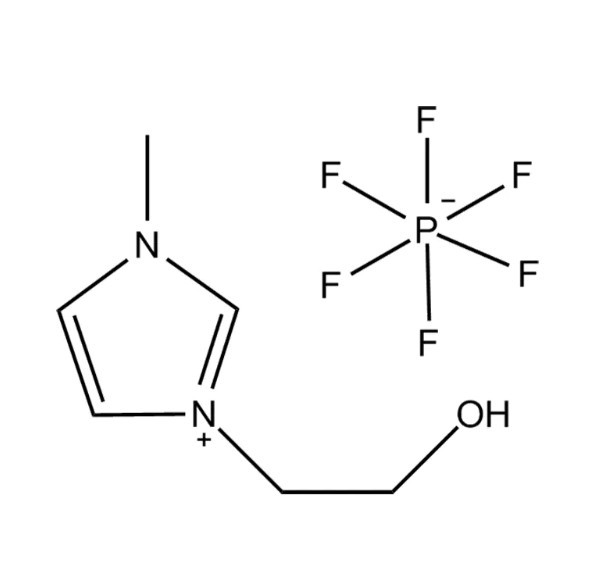
- 1-(2-hydroxyethyl)-3-methylimidazolium
- 2-hydroxyethyltrimethylammonium (cholinium)
- Hydroxyl-functionalized pyridinium salts
Anion Selection
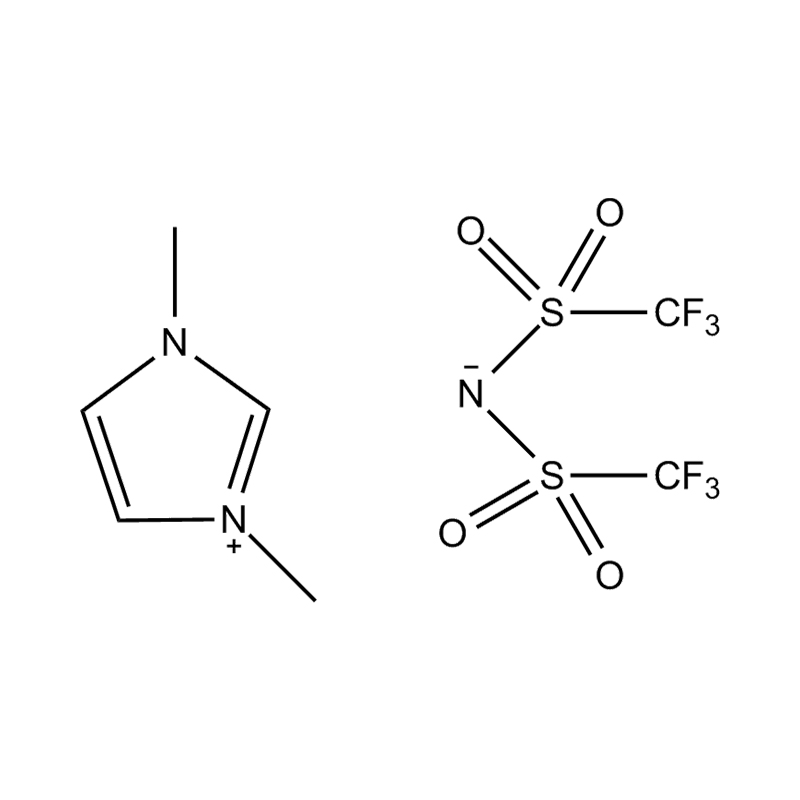
The anion strongly influences water miscibility, thermal stability, and hydrogen bonding. Common anions include chloride, acetate, tetrafluoroborate, bis(trifluoromethanesulfonyl)imide, and amino acid anions.
General Molecular Structure
A representative hydroxyl ionic liquid can be expressed as:
[Cation-OH]+ [Anion]-
For example, 1-(2-hydroxyethyl)-3-methylimidazolium acetate contains an imidazolium ring substituted with a hydroxyethyl side chain and paired with acetate as the counterion.
Role of the Hydroxyl Group in Structural Behavior
The hydroxyl group dramatically changes the internal organization of ionic liquids. It acts as both a hydrogen bond donor and acceptor, allowing the cation to interact strongly with the anion and with neighboring cations.
These interactions create a dynamic three-dimensional network that influences fluidity, conductivity, and solvent characteristics. Compared with non-functionalized ionic liquids, hydroxyl ionic liquids often exhibit higher viscosity and stronger affinity for polar compounds.
Hydrogen Bonding Network
The hydroxyl proton can form hydrogen bonds with anions such as acetate or chloride. In some systems, intramolecular hydrogen bonding occurs when the hydroxyl group folds back toward the cationic core.
Microstructural Organization
Many hydroxyl ionic liquids exhibit nanoscale segregation, where polar ionic domains coexist with less polar alkyl regions. The hydroxyl group enhances domain connectivity and modifies solvent structure.
Common Cation Structures with Hydroxyl Groups
| Cation Family | Typical Hydroxyl Substitution | Key Characteristics |
| Imidazolium | Hydroxyethyl side chain | High tunability and conductivity |
| Cholinium | Natural hydroxyl group | Biocompatible and low toxicity |
| Ammonium | Hydroxylated alkyl substituent | Simple synthesis |
| Phosphonium | Terminal hydroxyl chain | Excellent thermal stability |
Influence of Anion Structure
The anion determines how strongly it interacts with the hydroxyl group. Basic anions such as acetate and chloride form strong hydrogen bonds, which increase viscosity and enhance dissolution power for cellulose, lignin, and other hydrogen-bond-rich materials.
Weakly coordinating anions such as bis(trifluoromethanesulfonyl)imide reduce intermolecular interactions and generally lower viscosity while improving electrochemical stability.
Structure–Property Relationships
Viscosity
Hydroxyl groups increase viscosity because they create extensive hydrogen-bonding networks. Longer hydroxyalkyl chains and stronger anion interactions typically produce thicker liquids.
Polarity
The presence of hydroxyl groups enhances polarity and improves the ability to dissolve alcohols, sugars, and biopolymers.
Thermal Stability
Thermal stability depends on both ions. Phosphonium and imidazolium cations with stable anions often exhibit decomposition temperatures above 200°C.
Water Affinity
Hydroxyl groups generally increase hygroscopicity and water miscibility, which can be beneficial or problematic depending on the intended application.
Synthesis Strategies for Hydroxyl Ionic Liquids
Hydroxyl ionic liquids are typically synthesized by quaternization followed by anion exchange. In the first step, a nitrogen- or phosphorus-containing base reacts with a hydroxyl-functionalized alkyl halide. The resulting salt can then be converted to the desired anion using metathesis or acid-base neutralization.
For cholinium-based ionic liquids, synthesis is often straightforward because the hydroxyl group is already present in the cation precursor.
Representative Hydroxyl Ionic Liquids
- 1-(2-Hydroxyethyl)-3-methylimidazolium acetate
- Cholinium chloride
- 2-Hydroxyethyltrimethylammonium lactate
- Hydroxyl-functionalized phosphonium bis(trifluoromethanesulfonyl)imide
Applications Enabled by Structural Features
The structure of hydroxyl ionic liquids makes them useful in many technical areas.
- Cellulose dissolution and biomass processing
- Catalysis and reaction media
- Gas absorption, especially CO₂ capture
- Electrolytes for batteries and supercapacitors
- Pharmaceutical and cosmetic formulations
Challenges in Structural Optimization
Although hydroxyl functionality offers many advantages, it can also increase viscosity and moisture sensitivity. Designing an effective ionic liquid requires balancing hydrogen bonding strength, fluidity, stability, and environmental compatibility.
Researchers often modify side-chain length, hydroxyl position, and anion identity to tailor performance for specific uses.
Conclusion
The structure of hydroxyl ionic liquids consists of a cation and anion framework enhanced by one or more hydroxyl groups. These hydroxyl groups introduce strong hydrogen bonding, increased polarity, and highly tunable physicochemical properties. By understanding how cation architecture, anion selection, and intermolecular interactions work together, scientists and engineers can design hydroxyl ionic liquids optimized for applications ranging from biomass processing to advanced energy storage.