
 English
 Deutsch
 Español
 中文简体



A single wall CNT is about as minimal as a carbon material gets: one sheet of graphene rolled into a seamless cylinder, usually somewhere between 0.5 and 2 nanometres across. That thinness is the whole point. Nearly every atom sits on the surface, so the tube's mechanical, electrical and thermal behaviour is governed by its surface rather than its bulk.
For anyone formulating with nanotubes, that is both the opportunity and the headache. We have spent more than fifteen years manufacturing ionic liquids at LETD, and a good share of technical conversations with customers eventually land on the same question: how do you get a stubborn, bundled nanotube powder into a liquid and keep it there? The notes below combine what the literature says about single wall CNT structure and properties with what we have learned on the bench about dispersing and stabilising them.
Content
What a Single Wall CNT Actually Is
A single wall carbon nanotube (SWCNT) is one rolled graphene layer, with no second or third wall to fall back on. Because the graphene sheet can wrap at different angles, the lattice is described by a pair of integers (n, m). That index pair decides almost everything downstream. Armchair tubes where n equals m behave as metals, while most other chiralities open a band gap, so a typical as-produced sample is a mixture of metallic and semiconducting tubes. Sorting and purification are therefore part of the product specification, not an afterthought.
Properties that follow from the structure
- Tensile strength in the tens of GPa, with a Young's modulus close to 1 TPa for defect-free tubes.
- Axial thermal conductivity reported above 3,000 W/m·K for individual tubes, which is why they attract interest in thermal interface materials.
- Very high current-carrying capacity, often quoted near 109 A/cm² before failure in short tubes.
- Low density, roughly 1.3 to 1.4 g/cm³, giving exceptional specific properties.
- A high specific surface area, useful in electrodes but also a reason bundling is energetically attractive.
Where they come from
Commercial single wall CNT powder is produced mainly by arc discharge, laser ablation, or chemical vapour deposition variants such as HiPco and CoMoCAT. Each route leaves a different fingerprint: residual catalyst metal, amorphous carbon, and a characteristic bundle size. Two samples with the same nominal purity can behave very differently in a formulation, so it pays to ask for the synthesis route and the residual metal content rather than the percentage alone.
Why Bundling Is the Real Bottleneck
Individual tubes are rarely what you receive. Van der Waals attraction pulls single wall CNTs into ropes and bundles tens of nanometres wide, and those bundles are what a formulator actually has to separate. The usual answer is surfactant-assisted sonication, and it works — up to a point. Surfactants such as SDS or block copolymers adsorb onto the tube surface and create electrostatic or steric repulsion, but they leave an insulating residue that has to be washed away, which is unwelcome in conductive films and electrodes.
Sonication brings its own cost. Prolonged high-energy treatment shortens tubes, introduces defects and degrades the very properties you were trying to exploit. The practical compromise is a short, calibrated energy input combined with a dispersant that stabilises the tubes well enough that they stay apart afterwards. That is where ionic liquids enter the picture.
How Ionic Liquids Interact with Single Wall CNTs
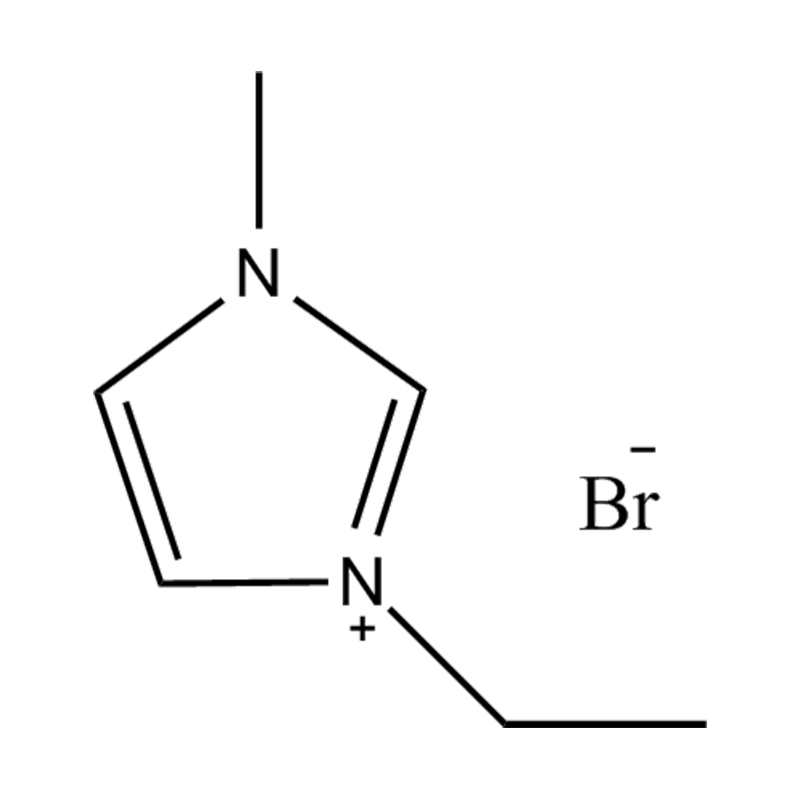
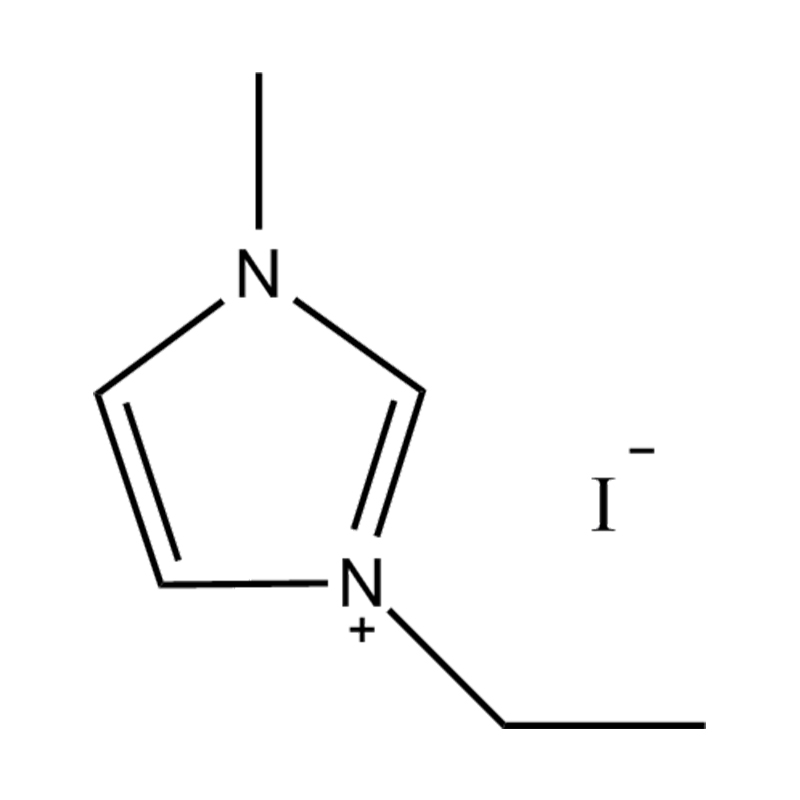
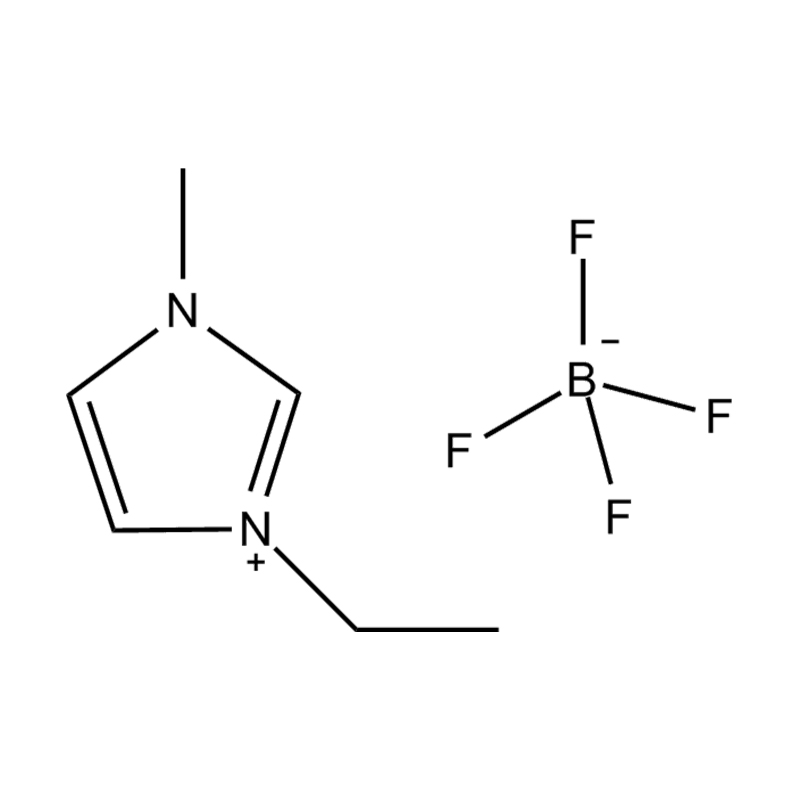
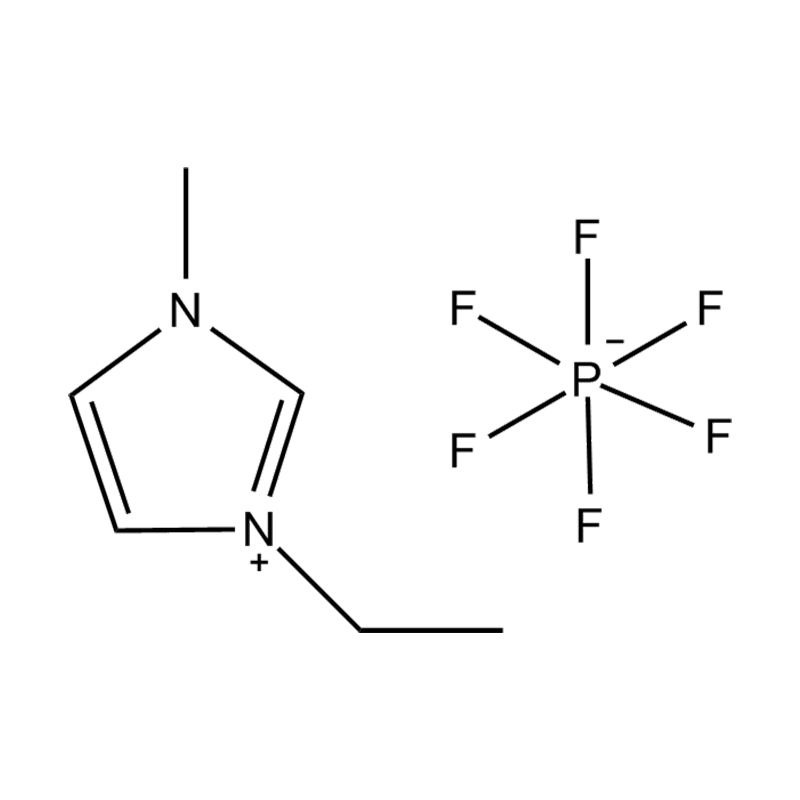
Imidazolium-based ionic liquids are unusually good at wetting graphitic surfaces. The cation sits flat against the graphene plane, held by cation–π interactions and van der Waals contacts, while the anion and the alkyl chain tune how the ionic layer packs. The result is a structured shell of ions around each tube that provides steric and electrostatic stabilisation without the surfactant residue problem. In the literature this combination is often described as forming physical gels, sometimes called bucky gels, in which a small nanotube loading turns an ionic liquid into a paste-like material.
Two consequences matter for real work. First, the ionic liquid stays where it is: negligible vapour pressure means the dispersion does not dry out or change concentration in an open vessel. Second, the ionic liquid can often remain in the final device as an electrolyte or a conductive binder instead of being removed. Polymerised ionic liquids take this further, giving a solid matrix that keeps nanotubes dispersed and mechanically anchored.
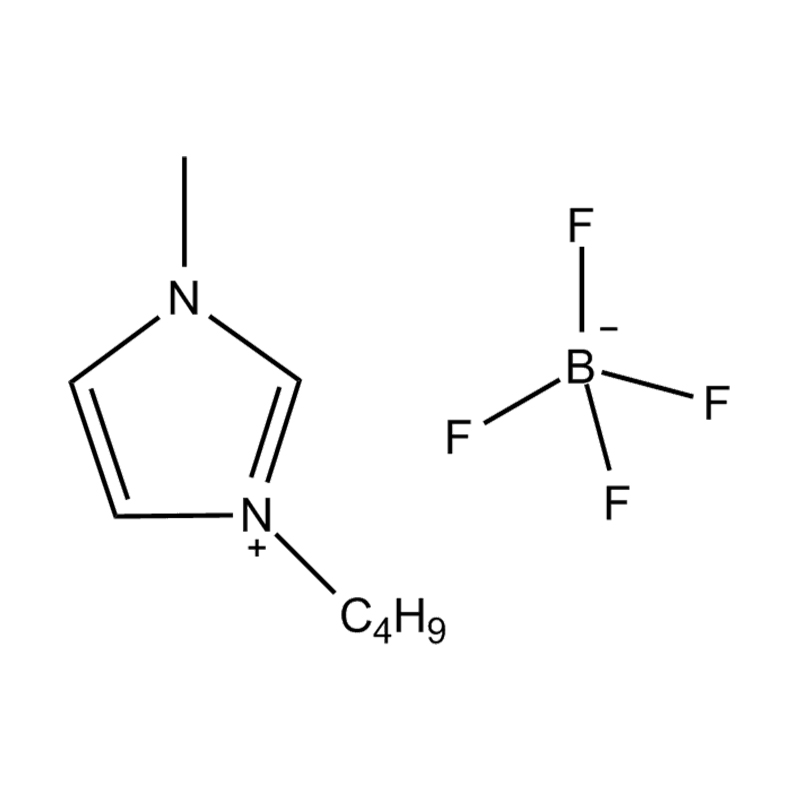 1-Butyl-3-methylimidazolium Tetrafluoroborate Ionic LiquidAn established imidazolium salt with 99% purity, useful as a well-characterised starting point before selecting a more application-specific ionic liquid.View Product →
Where a simple, well-characterised starting point is useful, an established imidazolium salt such as 1-butyl-3-methylimidazolium tetrafluoroborate is a sensible first trial before moving to a more application-specific structure.
Single Wall vs Multi Wall CNT at a Glance
The two families are often discussed as if one simply outperforms the other. In practice the choice depends on which property you are buying and how much processing you can tolerate.
| Property | Single wall CNT | Multi wall CNT |
|---|---|---|
| Wall structure | One graphene cylinder | Several nested cylinders |
| Typical outer diameter | 0.5–2 nm | 5–50 nm |
| Electrical behaviour | Metallic or semiconducting by chirality | Predominantly metallic-like |
| Dispersion difficulty | High; strong rope formation | Moderate; agglomerates still form |
| Percolation loading | Lower | Higher |
| Relative cost per gram | Higher | Lower |
Where Ionic Liquid–Nanotube Systems Earn Their Keep
Energy storage
Supercapacitors and lithium cells benefit from an ionic liquid electrolyte that also acts as the nanotube binder. The wide electrochemical window of many ionic liquids lets single wall CNT electrodes operate at higher voltages than aqueous systems allow, and the absence of a separate binder removes a resistive interface.
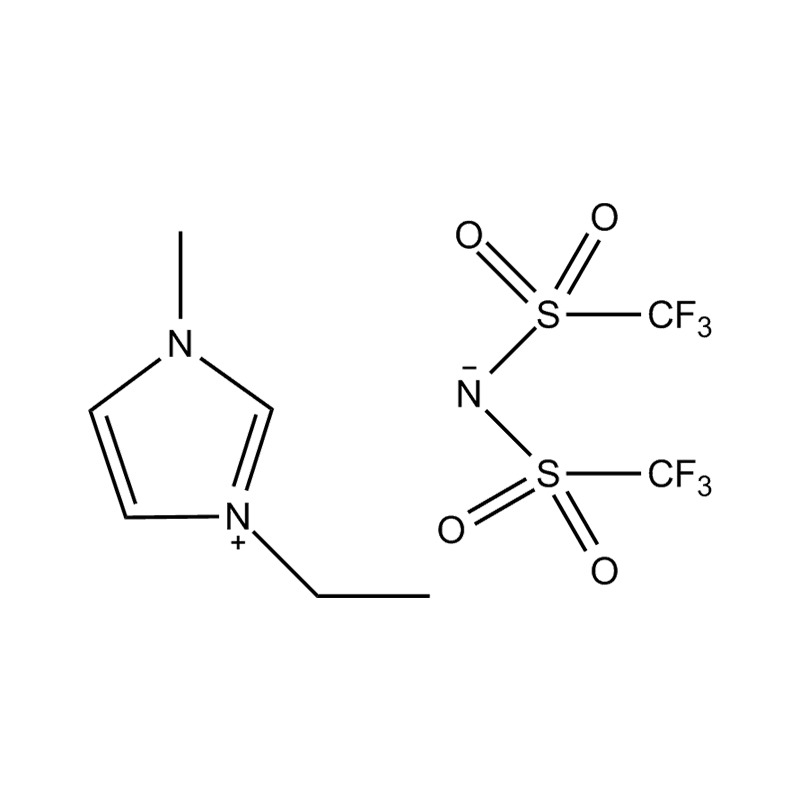
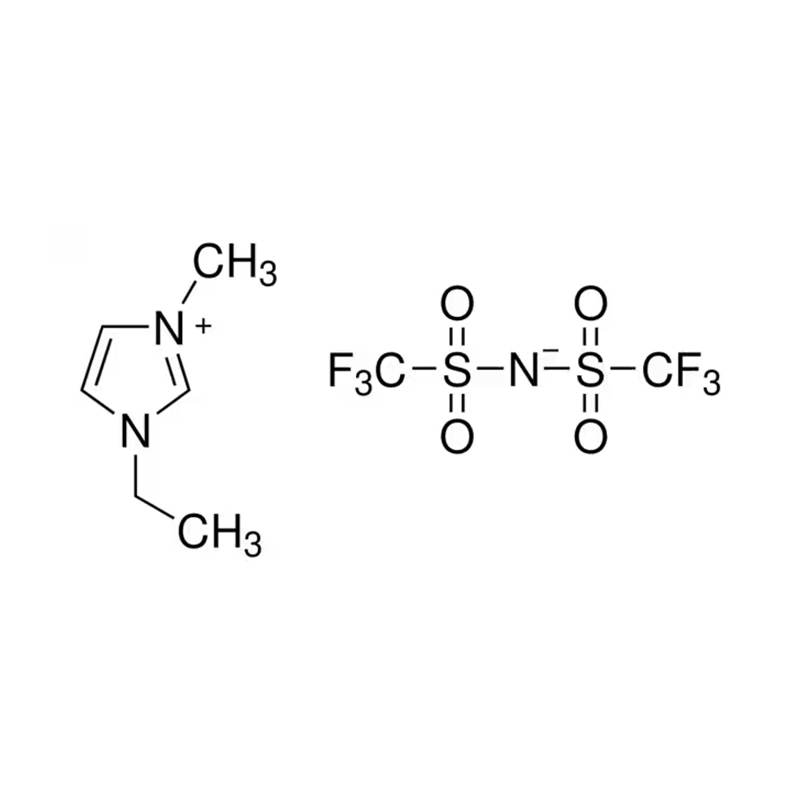 1-Ethyl-3-methylimidazolium Bis(trifluoromethylsulfonyl)imide Ionic LiquidAn imidazolium ionic liquid listed as a lithium electrolyte additive, relevant when evaluating electrolyte systems and nanotube binders for higher-voltage cells.View Product →
Static control and conductive plastics
At low loadings, single wall CNTs build a percolating network that bleeds away static charge without the humidity dependence of traditional chemistry. Ionic liquids complement that network by improving wetting and dispersion during compounding. Our antistatic agent applications page covers how these systems behave in plastics, tapes and electronics.
Composites, sensors and thermal interfaces
In composites, a well-dispersed ionic liquid phase helps individualise tubes before curing, which improves the mechanical payoff per gram. In sensing, the ion–nanotube interface responds to strain and to certain vapours. For thermal interface materials, the ionic liquid must be chosen with degradation temperature in mind, since even a modest ionic conductivity can matter in electronics.
Readers who want a broader view of where these salts fit industrially may find our overview of why ionic liquids are treated as a distinct class of materials a useful starting point.
Choosing an Ionic Liquid: Notes from the Bench
There is no universal "best" ionic liquid for single wall CNT work, but a few selection rules save time.
- Start with the anion. Tetrafluoroborate and hexafluorophosphate are inexpensive and dispersible but can hydrolyse; bis(trifluoromethylsulfonyl)imide is more robust and hydrophobic; dicyanamide is low viscosity and suits conductive and antistatic work.
- Check halide residue. Trace chloride from an incomplete anion exchange is the most common cause of corrosion and of unexpected electrochemical behaviour.
- Control water. Even "hydrophobic" salts pick up a few thousand ppm, and that shifts viscosity, conductivity and, in lithium systems, cell performance.
- Match viscosity to your process. High viscosity aids steric stabilisation but complicates pumping and coating; low viscosity wets faster but settles faster.
- Ask about scale early. A dispersion that works in a 20 mL vial is not automatically reproducible in a 200 kg batch.
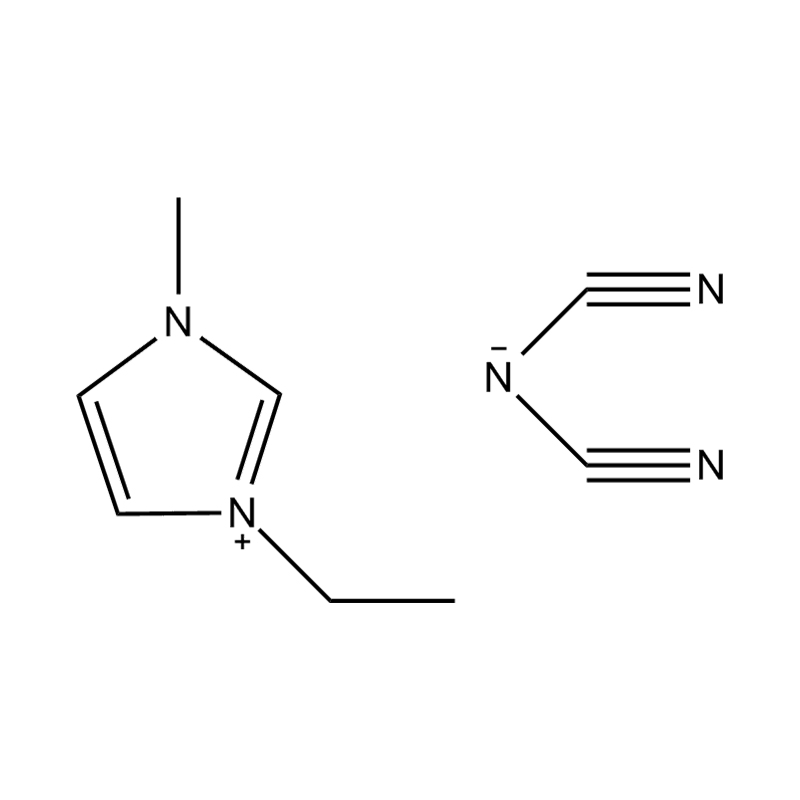 1-Ethyl-3-methylimidazolium Dicyanamide Low-Viscosity Ionic LiquidA low-viscosity dicyanamide ionic liquid with 29.3 mS/cm conductivity and 16.1 cP viscosity, useful when conductivity is the main selection criterion.View Product →
Low-viscosity salts such as 1-ethyl-3-methylimidazolium dicyanamide are a frequent choice when the target is conductivity rather than solvation power. Where none of the catalogue structures fit, custom synthesis is usually the faster route than reformulating around an imperfect salt.
Handling and Safety
Single wall CNT powder is a fine, low-density dust and should be treated as such: work in a fume hood or glovebox, use grounded containers, avoid dry brushing, and wear appropriate respiratory protection. The health debate around nanotubes is largely about respirable, rigid fibre-like material, and good containment is the practical control regardless of where that debate settles.
Ionic liquids are sometimes described as "green solvents", which is a shortcut rather than a guarantee. Low vapour pressure reduces inhalation exposure, but many imidazolium salts are water-soluble and persistent, and fluoride-containing anions deserve respect when heated. Check thermal stability before any process above 200 °C, and confirm waste handling with your local regulations rather than assuming biodegradability.
Single wall CNT remains a demanding material precisely because its best properties live at the surface, where everything sticks. The formulation work — dispersing, stabilising, and keeping the tubes individual through drying or curing — is where most projects succeed or stall. Ionic liquids are not a universal answer, but for teams already working with molten salts or ionic electrolytes, they let one material do two jobs at once.
If you are evaluating an imidazolium, pyrrolidinium, or phosphonium salt for a nanotube dispersion and want to talk through anion choice, purity limits, or a custom structure, our technical team is happy to compare notes on what has worked in similar systems.