
 English
 Deutsch
 Español
 中文简体
中文简体



Battery engineers evaluating cell chemistries for a post-lithium-ion program usually start with one question: can we get beyond 400 Wh/kg without betting on a solid-state system that has not shipped at scale? Lithium-sulfur (Li-S) batteries answer that question in principle, but the chemistry has a reputation for dying young. The cause is not the sulfur cathode alone; it is the electrolyte and its interaction with the lithium-metal anode. Ionic liquids address both problems in ways that conventional ether or carbonate electrolytes cannot, and they are available today in industrial quantities from manufacturers such as Ldet Energy. That combination of technical fit and supply reality is why Li-S remains one of the most practical next-generation chemistries, provided the electrolyte is engineered rather than borrowed from another cell format.
Content
Why Li-S Batteries Are Still Worth Specifying
Start with the numbers that matter for system design. The theoretical specific energy of the sulfur-to-lithium-sulfide redox couple is roughly 2,600 Wh/kg, five to ten times the practical value of today's lithium-ion cells. Even after real-world inefficiencies such as excess electrolyte, conductive carbon, separator mass, and pouch hardware, practical Li-S packs are repeatedly designed to targets of 400 to 600 Wh/kg. Sulfur contributes a theoretical capacity of 1,675 mAh/g, and the cell discharges at about 2.15 V versus Li/Li+. For procurement teams, the equally important facts are that sulfur is abundant, inexpensive, and free of cobalt and nickel, removing both supply-chain bottlenecks and responsible-sourcing concerns.
None of this is new. Li-S research spans decades, and the reason the chemistry has not replaced lithium-ion is a cycle-life problem rooted in electrolyte behavior. The key point for anyone planning a prototype or a product roadmap is that the failure mechanism is well understood and that electrolyte design, not heroic electrode architecture, is the most direct fix.
Four Barriers That Control Li-S Cycle Life
An Li-S cell fails in four interconnected ways. Understanding them before writing a specification is the difference between a 50-cycle demonstration and a 500-cycle product.
| Barrier | What happens | Performance consequence | Ionic-liquid response |
|---|---|---|---|
| Polysulfide shuttling | Soluble Li2S4 to Li2S8 species migrate to the anode | Self-discharge, low Coulombic efficiency, capacity fade | Cation and anion choice moderates solubility and stabilizes the interphase |
| Insulating discharge products | S and Li2S transport electrons poorly | Low sulfur utilization at practical current densities | Better wetting of the cathode keeps active material electrochemically accessible |
| Cathode volume swing | About 80% expansion from S to Li2S | Electrode cracking and loss of active contact | A stable, low-volatility electrolyte accommodates structural change at the interface |
| Lithium-metal degradation | Dendrite growth plus corrosion by polysulfides | Short-circuit risk and short cycle life | FSI and TFSI anions promote a protective SEI on lithium |
Read the table as a system view. Every barrier has an electrolyte-side countermeasure, which is why most Li-S development programs now spend more time on electrolyte formulation than on cathode synthesis alone.
What Ionic Liquids Contribute That Conventional Electrolytes Cannot
Conclusion first: ionic liquids fix the Li-S system at the interface, not just in the bulk. Conventional dioxolane and dimethoxyethane blends are chosen because they dissolve polysulfides, and that same property drives the shuttle. Carbonate electrolytes, in turn, attack polysulfide intermediates and are effectively unusable. Ionic liquids occupy a different design space because the cation and anion are selected independently to control solvation strength, electrochemical window, and the solid-electrolyte interphase.
Three properties matter most in practice:
- Wide electrochemical window. Most ionic liquids remain stable well above 4.5 V versus Li/Li+, and many do not readily decompose on lithium metal, which is a basic requirement for an Li-S anode.
- Non-flammability and near-zero vapor pressure. This is a meaningful safety advantage over volatile ether blends and simplifies system-level validation.
- Tunable polysulfide interaction. Pyrrolidinium and piperidinium cations are far less reactive toward nucleophilic polysulfides than imidazolium cations, while TFSI and FSI anions reduce shuttle more effectively than the same lithium salt alone in an ether solvent.
Cation and anion families worth testing
The practical choice in an Li-S program is usually between a low-viscosity imidazolium salt and a more stable cyclic cation. The table summarizes what each family brings to a half-cell or pouch-cell test matrix.
| Family | Typical anion partners | Practical role |
|---|---|---|
| Pyrrolidinium | TFSI, FSI | Stable SEI, wide window, standard choice for cycle-life studies |
| Piperidinium | TFSI, FSI | Reduced polysulfide shuttling, strong anodic stability |
| Imidazolium | FSI, TFSI, BF4 | Lower viscosity and better rate capability; requires SEI management |
| Quaternary ammonium | TFSI | Lower cost, wide window, useful for large-format cells |
Low viscosity is the main reason a formulation team begins with 1-ethyl-3-methylimidazolium bis(fluorosulfonyl)imide, or EMIM-FSI. It conducts well at room temperature, and the FSI anion supplies a lithium-friendly SEI. For cells that prioritize discharge rate over maximum energy density, EMIM-FSI-based electrolytes are one of the fastest ways to improve sulfur utilization.
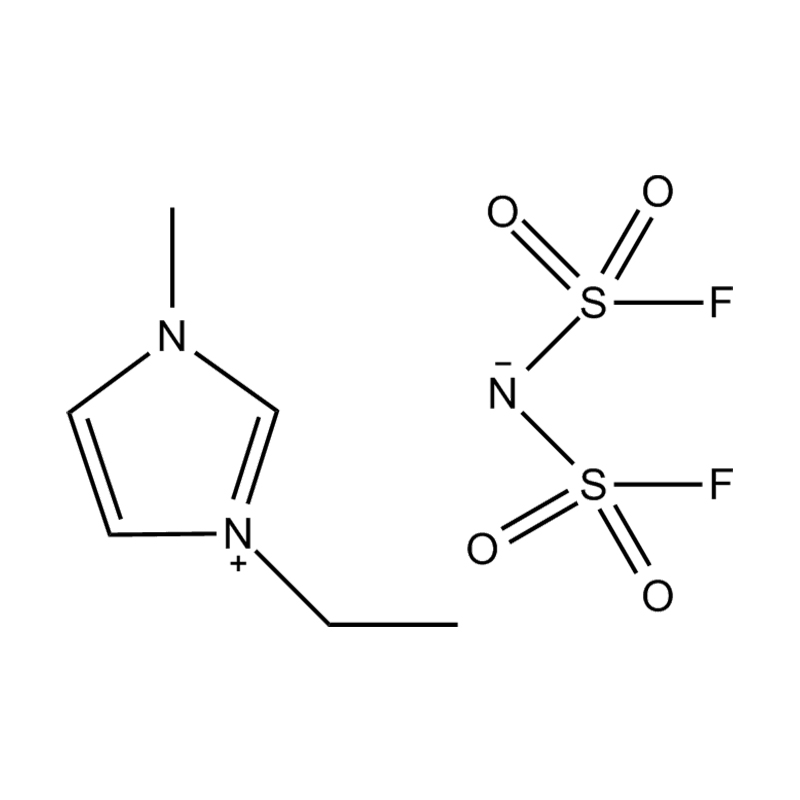 1-Ethyl-3-methylimidazolium bis(fluorosulfonyl)imide (EMIM-FSI) Ionic LiquidLow viscosity enables good room-temperature conductivity, while the FSI anion helps form a lithium-friendly SEI, making it a strong candidate for high-rate lithium-sulfur electrolyte formulations.View Product →
When the target is long cycle life on the anode side, a piperidinium cation is the more conservative choice. 1-Butyl-1-methylpiperidinium bis(trifluoromethylsulfonyl)imide, often abbreviated PP14-TFSI, remains electrochemically stable across a wide temperature range while keeping polysulfide migration in check.
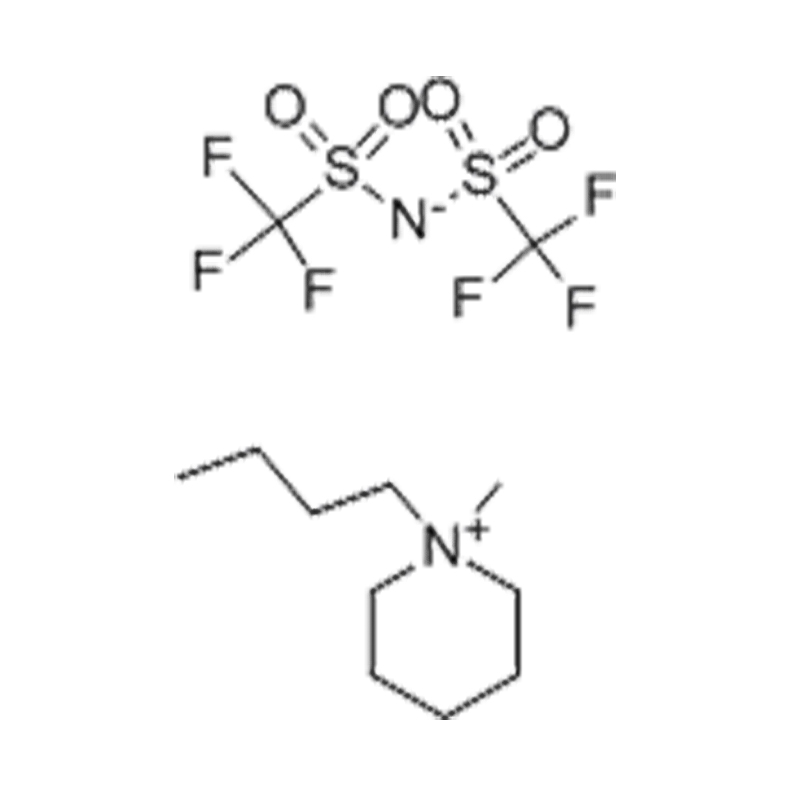 1-Butyl-1-methylpiperidinium bis(trifluoromethylsulfonyl)imide (PP14-TFSI) Ionic LiquidPiperidinium cation provides wide-temperature electrochemical stability and helps control polysulfide migration, offering a conservative choice for long-cycle-life anode-side electrolyte designs.View Product →
Specifying Ionic Liquid Grades: What Procurement Should Ask
Battery-grade purity is not the same as catalog purity. For Li-S work, water content, halide residuals, and the synthetic route itself matter more than the advertised assay. Water at even a few hundred ppm reacts with lithium metal and FSI anions, generating hydrogen fluoride and consuming active material.
- Water content. Set a batch-acceptance limit near 300 ppm by Karl Fischer, and ask for the measurement on the certificate of analysis.
- Halide residuals. Keep chloride and bromide below 500 ppm, since halides accelerate lithium-anode corrosion even when the main salt is battery-grade LiTFSI.
- Cation purity. Confirm that dialkylimidazolium by-products are controlled; they affect viscosity and can alter SEI chemistry.
- Viscosity documentation. A viscosity value at 25 °C is a cheap and reliable proxy for batch-to-batch consistency.
The trade-off between FSI and TFSI anions deserves an explicit evaluation. FSI delivers better lithium-metal passivation and lower viscosity; TFSI provides higher thermal and hydrolytic stability. A serious testing program keeps both options open at 20 to 50 weight percent in the electrolyte instead of committing to one anion before data exists. For elevated-temperature testing, 1-ethyl-3-methylimidazolium bis(trifluoromethylsulfonyl)imide is a low-viscosity TFSI salt that retains the imidazolium handling advantages while adding thermal headroom.
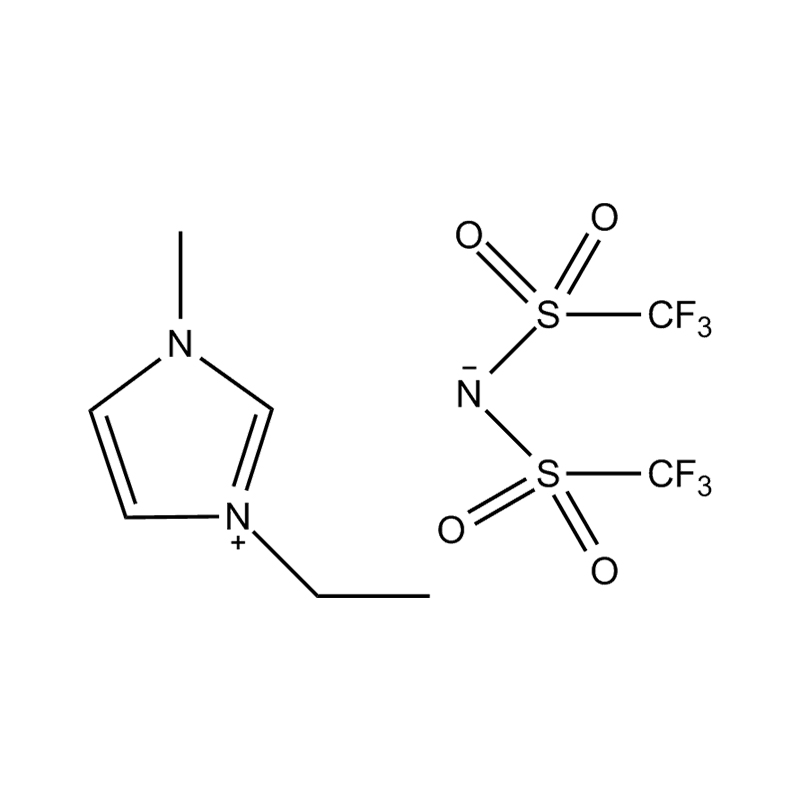
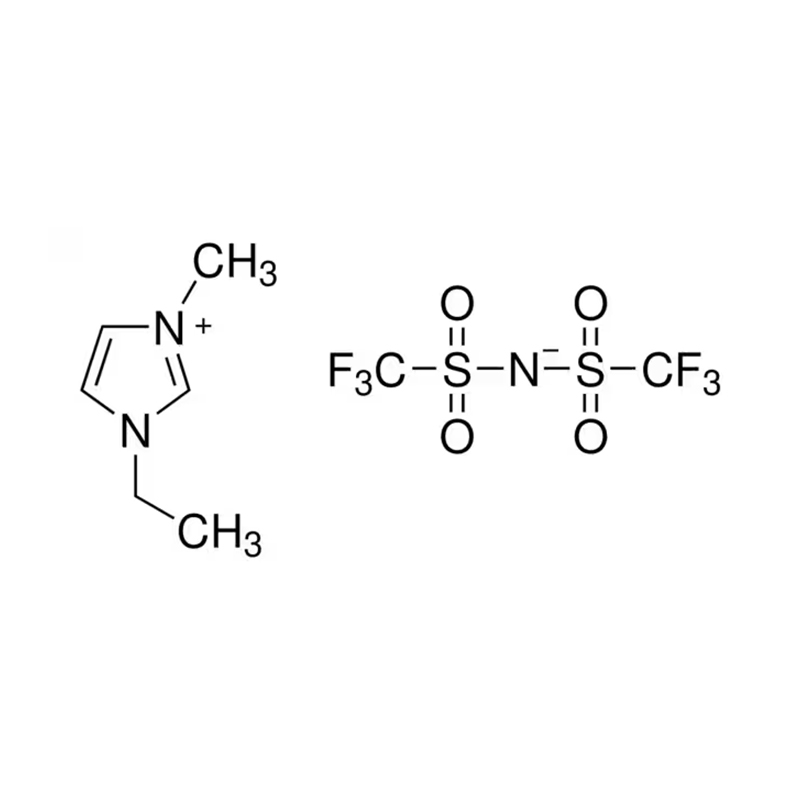 1-Ethyl-3-methylimidazolium bis(trifluoromethylsulfonyl)imide (EMIM-TFSI) Ionic LiquidBlends imidazolium handling benefits with TFSI's higher thermal and hydrolytic stability, serving as a low-viscosity option for elevated-temperature electrolyte evaluation and comparative anion testing.View Product →
Beyond monomeric salts, polymeric ionic liquids have also shown promise in battery and supercapacitor research, particularly when mechanical stability of the separator-side coating is a concern.
Qualification Roadmap: From Evaluation Cell to Pilot Lot
Buy evaluation quantities from a supplier with synthesis control, not a distributor reselling commodity stock. Li-S electrolyte development works by changing one variable at a time, and if the impurity profile of the ionic liquid shifts between batches, cycle-life data becomes impossible to interpret.
- Request the certificate of analysis and an ion-chromatography halide trace before the first purchase.
- Run a three-point evaluation: solubility in your base electrolyte, lithium plating and stripping in a symmetric cell, and a 100-cycle coin-cell test against your current baseline.
- Confirm custom-synthesis tolerance. No two Li-S teams run identical formulations, and a supplier that can produce low-halide grades or alternate anion combinations will save you months of solvent-screening work.
- Negotiate batch-acceptance criteria in advance, including water, halide, assay, and color, and verify that the same criteria survive a scale-up from laboratory kilograms to pilot quantities.
Ldet Energy is one supplier that matches this profile. The company has manufactured ionic liquids at industrial scale since its founding in 2009, offers a catalogue spanning imidazolium, pyrrolidinium, piperidinium, pyridinium, and quaternary ammonium structures, and has presented its battery-oriented electrolyte additives at international battery exhibitions. Because it also accepts custom-synthesis projects, R&D teams can test a specific structure rather than a generic catalogue sample. To discuss analytical requirements and scale-up, procurement teams can work directly with Ldet's technical staff.
The Li-S battery will not replace lithium-ion everywhere, but for energy-density-driven applications such as aviation, defense, and long-duration portable power, it is the chemistry most likely to reach production. The electrolyte decides whether the cell succeeds, and ionic liquids are the most reliable electrolyte platform available at industrial scale today. The next step is not another literature review; it is ordering 100 grams of the right ionic liquid and building a 100-cycle data set.