
 English
 Deutsch
 Español
 中文简体
中文简体



Content
Overview of Antistatic Agents and Their Function
Antistatic agents are chemical compounds designed to reduce or eliminate static electricity accumulation on the surface of materials. In industrial applications, static charge can lead to dust attraction, material sticking, spark generation, or even electronic component failure. Antistatic agents function by either increasing surface conductivity or attracting moisture to dissipate charges, making them essential for plastics, textiles, and electronics.
Selecting the appropriate antistatic agent requires understanding the base material, the environmental conditions, and the desired duration of effect. Factors such as material compatibility, migration potential, and processing conditions play a critical role in achieving effective and durable static control.
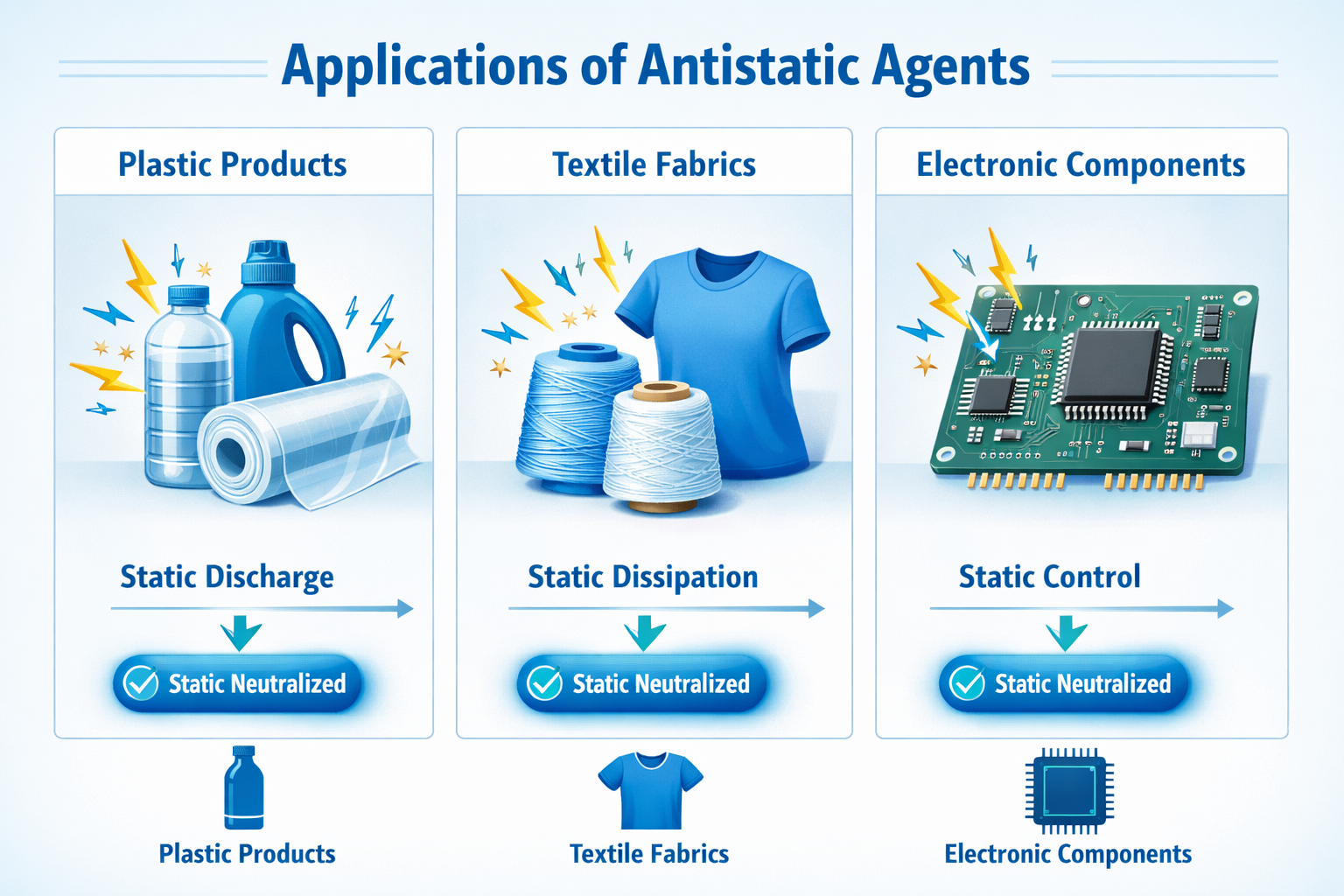
Antistatic Agents for Plastics
In plastic applications, static charge buildup is common due to low surface conductivity. Antistatic agents can be incorporated as surface coatings or internal additives during the extrusion, molding, or film production process. The choice between permanent or temporary antistatic agents depends on product lifespan and environmental exposure.
Types of Antistatic Agents in Plastics
- External antistatic agents: Applied as surface coatings for immediate static control but may wear off over time
- Internal antistatic agents: Integrated during polymer processing for long-lasting effects
- Nonionic and ionic agents: Selected based on polymer type and desired conductivity
Antistatic Agents for Textile Applications
Textile fibers are prone to static accumulation due to friction between fibers and environmental dryness. Antistatic agents in textiles improve wearer comfort, reduce dust attraction, and prevent fabric clinging. These agents are commonly applied through finishing processes or incorporated into fibers during production.
Key Considerations for Textile Antistatic Treatments
- Compatibility with fiber type: cotton, polyester, nylon, or blends
- Durability against washing and wear
- Effect on fabric hand feel and breathability
- Environmental and regulatory compliance for chemical finishes
Antistatic Agents for Electronics
Electronic devices and components are highly sensitive to electrostatic discharge (ESD), which can cause immediate damage or latent failures. Antistatic agents used in electronic applications are typically integrated into packaging materials, protective films, or coatings to control surface charge accumulation. Selection criteria include long-term stability, non-corrosive behavior, and compatibility with delicate components.
Typical Application Methods in Electronics
- Coating antistatic films on device surfaces
- Incorporating antistatic additives into polymer housings or packaging
- Using non-migratory antistatic agents to ensure long-term charge control
Comparison of Antistatic Agent Types Across Applications
| Material | Common Antistatic Agent Type | Key Performance Factor |
|---|---|---|
| Plastics | Internal or external polymer-compatible agents | Durability and consistent conductivity |
| Textiles | Cationic or nonionic finishes | Wash resistance and fiber compatibility |
| Electronics | Non-migratory coatings and additives | Long-term ESD protection and chemical stability |
Practical Guidelines for Selecting Antistatic Agents
When choosing an antistatic agent, it is essential to match the chemical properties of the agent to the base material, evaluate processing conditions, and consider environmental exposure. Testing under realistic operational conditions ensures that the selected agent provides reliable static control throughout the product’s intended service life.
- Evaluate the base material’s polarity and compatibility with the antistatic agent
- Consider processing temperatures and mechanical stress during fabrication
- Ensure the agent meets regulatory and safety standards for the target industry
- Conduct performance tests simulating real-world conditions, including moisture, friction, and handling
A systematic selection process ensures that plastics, textiles, and electronic components remain safe, functional, and resistant to static-related issues throughout their lifecycle.