
 English
 Deutsch
 Español
 中文简体



Most people who have spent time with lithium-sulfur cells remember their first surprise: an initial discharge that looks wonderful, followed by a slow, stubborn fade over the next fifty cycles, and the quiet suspicion that the cathode was never the whole story. More often than not, the answer sits in the electrolyte.
We have been producing ionic liquids at our plant in Deqing, Zhejiang since 2009, and a growing share of the technical questions we receive now comes from Li-S teams trying to make sulfur behave. This article is our attempt to put the practical knowledge in one place: what the shuttle really is, which electrolyte levers move the numbers, and where ionic liquids genuinely help rather than just sound exotic.
Content
- 1 Why the Li-S Battery Keeps Coming Back
- 2 The Polysulfide Shuttle, Without the Jargon
- 3 The Electrolyte Levers That Actually Move the Numbers
- 4 Where Ionic Liquids Earn Their Place
- 5 Matching an Ionic Liquid to Your Li-S Cell
- 6 Purity and Batch Consistency Decide Reproducibility
- 7 Let's Talk About Your Cell Chemistry
Why the Li-S Battery Keeps Coming Back
On paper the chemistry is unusually elegant. A lithium metal anode pairs with an elemental sulfur cathode, and because sulfur is light, abundant and stores charge through a two-electron conversion rather than intercalation, the theoretical numbers are hard to ignore. Sulfur offers a theoretical capacity of about 1,675 mAh per gram, and the full cell is often quoted at roughly 2,600 Wh per kilogram at the material level. Practical targets are more modest, usually in the 400 to 600 Wh/kg range, but even that is a meaningful step beyond conventional lithium-ion.
The cost side is equally attractive. Sulfur is a by-product of petroleum refining, it is cheap, and it avoids the cobalt and nickel supply questions that dominate discussions of layered oxide cathodes. What holds the technology back is not the concept but the housekeeping: sulfur is electrically insulating, the cathode swells and contracts substantially during cycling, and the intermediate species formed during discharge have an unfortunate habit of dissolving into the electrolyte. Then there is the lithium metal anode, which reacts with almost everything it meets and tends to grow in uneven shapes.
The Polysulfide Shuttle, Without the Jargon
During discharge, the S8 ring opens and reduces step by step. The early and middle steps produce long-chain lithium polysulfides that are soluble in most ether-based electrolytes. These dissolved species are mobile, so they can diffuse away from the cathode, reach the lithium anode, and be chemically reduced there. The reduced products then drift back toward the cathode and are re-oxidized, carrying charge that never does useful external work.
That loop is the shuttle. Its consequences are easy to recognize in data: coulombic efficiency that never quite reaches unity, a cell that loses capacity while sitting idle, active material that migrates away from where it was placed, and a lithium surface that becomes progressively rougher and more resistive. Anyone who has watched a Li-S cell self-discharge over a weekend has met the shuttle in person.
The usual countermeasures divide into three camps. Cathode hosts such as porous carbons, metal oxides or nitrides adsorb and confine polysulfides. Separator coatings and interlayers act as physical or chemical barriers. Electrolyte engineering changes how well the intermediates dissolve in the first place, and that third camp is where chemistry choices pay off fastest.
The Electrolyte Levers That Actually Move the Numbers
Electrolyte design for Li-S is a balancing act rather than a single optimization. The variables that matter most in practice are:
- Solvent donor number and dielectric constant, which govern how readily polysulfides dissolve and how quickly they shuttle.
- Salt concentration and lithium-ion transport, including the high-concentration and localized high-concentration approaches that suppress free-solvent attack on the anode.
- Additive packages, particularly nitrate-type additives long used to passivate the lithium surface and stabilize plating.
- Electrolyte-to-sulfur ratio, usually expressed as grams or microliters of electrolyte per milligram of sulfur, or per Ah of capacity.
- Flammability and thermal behavior, since ether-based solvents have low flash points and lithium metal is unforgiving.
The lean-electrolyte constraint deserves particular attention. Many impressive cycle numbers are produced with generous electrolyte volumes, and the same chemistry can fail quickly once the electrolyte-to-sulfur ratio is reduced toward the values a commercial cell would need. Viscosity, wettability and ionic conductivity all become limiting at that point, which is precisely where ionic liquids enter the conversation.
Where Ionic Liquids Earn Their Place
Ionic liquids are salts that are liquid near room temperature: an organic cation paired with an organic or inorganic anion, with no solvent involved. Their appeal in battery work is straightforward. They have effectively no vapor pressure, they are generally non-flammable, many are thermally stable well above 200 °C, and their electrochemical windows can be wide enough for aggressive chemistries.
They are not, however, a drop-in replacement for ether solvents. Neat ionic liquids are noticeably more viscous than conventional carbonate or ether blends, their ionic conductivity is lower, and their ability to dissolve polysulfides is limited, which cuts both ways: less shuttle, but also slower sulfur utilization and poorer wetting of a porous cathode. In practice they show up as co-solvents that reduce flammability, as additives that modify the anode interface, or as components of gel and polymer electrolytes for semi-solid designs.
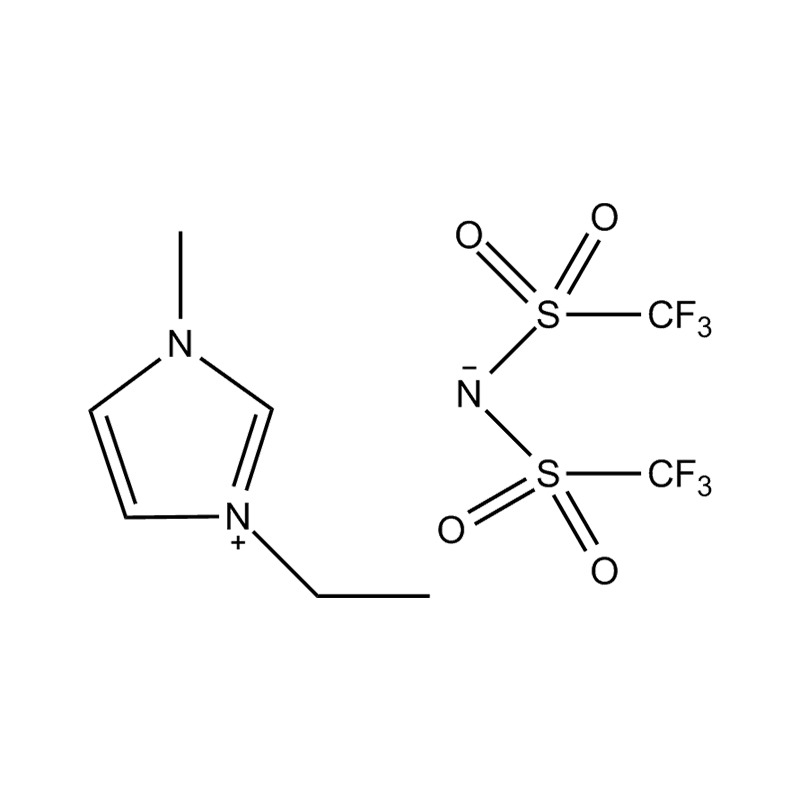
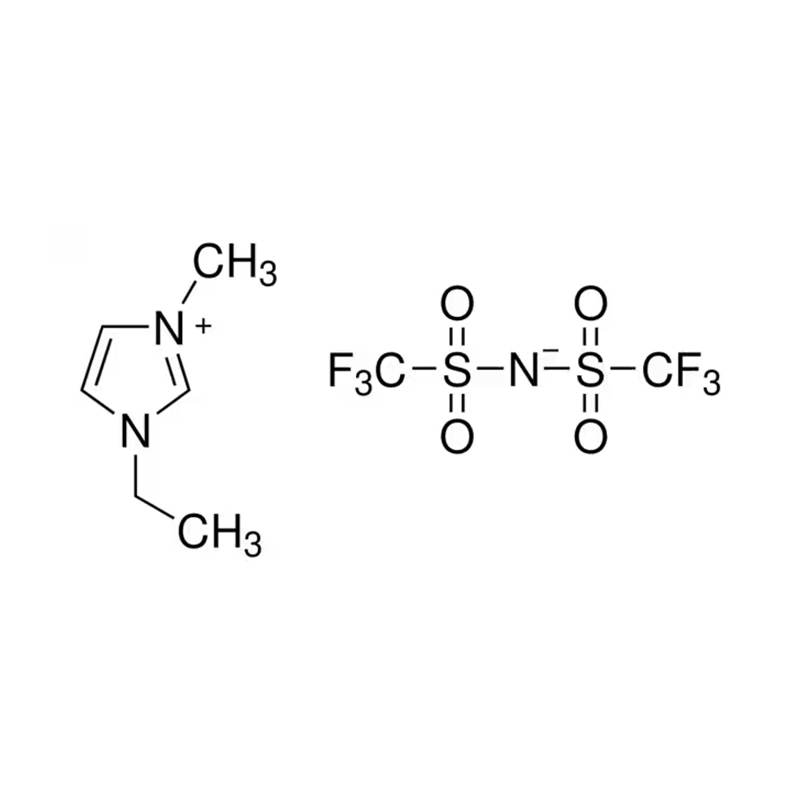 1-Ethyl-3-methylimidazolium TFSI Ionic Liquid AdditiveRepresentative imidazolium TFSI salt for exploratory electrolyte work, often used as a co-solvent or comparison baseline before anode-tolerant structures.View Product →
Imidazolium salts are the classic starting point for exploratory work because they are the least viscous of the common families and are commercially available in quantity. A representative example is the ethyl-methylimidazolium TFSI salt, which is often used as a co-solvent or as a baseline for comparison before moving to more anode-tolerant structures.
Matching an Ionic Liquid to Your Li-S Cell
The choice of cation matters more than most newcomers expect. Imidazolium rings carry a slightly acidic proton at the C2 position, and that proton can react with lithium metal, so imidazolium-based electrolytes are usually kept away from direct, prolonged anode contact or paired with a protective interphase. Saturated ring cations, pyrrolidinium and piperidinium in particular, avoid this problem and are generally the preferred families when lithium metal compatibility is a priority.
| Cation family | Typical anions | Main contribution | Points to watch |
|---|---|---|---|
| Imidazolium | TFSI, FSI, BF4 | Lowest viscosity, good conductivity, widely available | C2 proton reactivity toward lithium metal |
| Pyrrolidinium | TFSI, FSI | Wide stability window, better lithium compatibility | Higher viscosity, lower neat conductivity |
| Piperidinium | TFSI, FSI | Good thermal and electrochemical stability | Viscosity and salt solubility limits |
| Ammonium and phosphonium | TFSI, FSI, BF4 | Very high anodic stability | Cost, and limited control over polysulfide solvation |
 1-Ethyl-1-methylpyrrolidinium TFSI Electrolyte AdditivePyrrolidinium TFSI salt for lithium-metal-compatible electrolyte work; often blended with ether solvent to reduce viscosity while retaining safety.View Product →
For pyrrolidinium systems, the ethyl-methyl and butyl-methyl TFSI salts are the workhorses. They are frequently blended with a small amount of ether solvent to bring viscosity down while retaining much of the safety benefit.
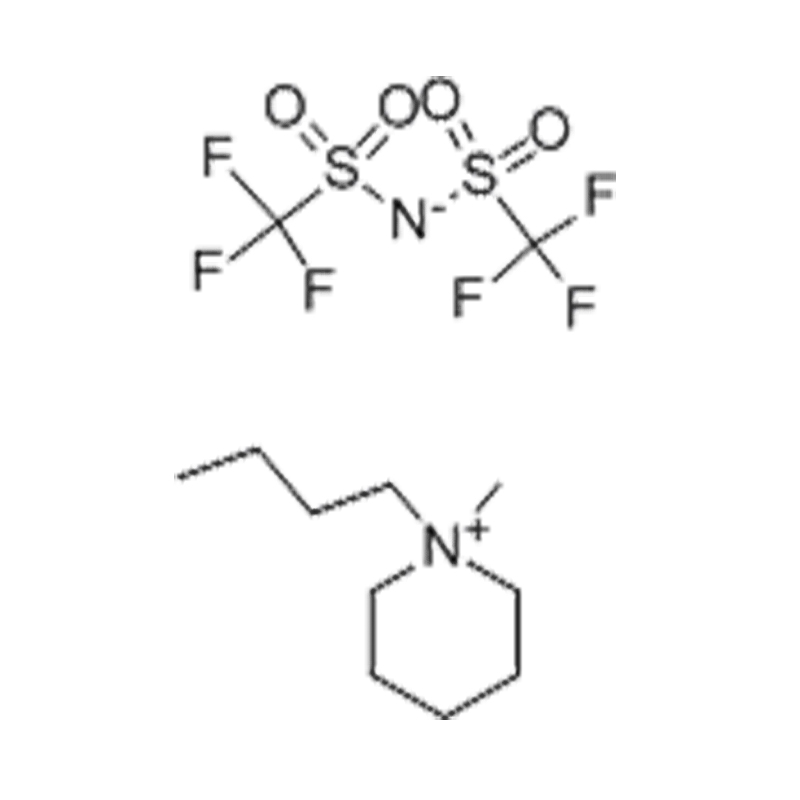 1-Butyl-1-methylpiperidinium TFSI Electrolyte AdditivePiperidinium TFSI analogue for electrolyte formulations where thermal stability is the deciding factor and behavior similar to pyrrolidinium systems.View Product →
Piperidinium analogues such as butyl-methylpiperidinium TFSI behave similarly and are sometimes preferred where thermal stability is the deciding factor.
The anion is the other half of the decision. TFSI is chemically robust and relatively gentle toward aluminum current collectors. FSI forms a more effective interphase on lithium metal but is more aggressive toward aluminum at higher potentials and is more moisture-sensitive. Many groups settle on a mixed-anion approach, and the honest answer is that the right ratio depends on your cathode loading, your voltage window and your electrolyte-to-sulfur target.
Purity and Batch Consistency Decide Reproducibility
There is a less glamorous side to this work that determines whether results hold up. Residual halide from the alkylation step, water content in the parts-per-million range, and the presence of trace protic impurities all affect the lithium interface far more than the headline structure suggests. A cell that plates smoothly with one batch of electrolyte and shows dendrites with the next is usually telling you something about purity, not about the concept.
For that reason we work with research teams on specification rather than just catalog numbers: which cation, which anion, what water limit, what halide limit, what volume makes sense for the experiment before anyone commits to a production quantity. Our lithium electrolyte additives range covers imidazolium, pyrrolidinium, piperidinium and quaternary ammonium structures with TFSI, FSI and other anions, and custom synthesis is routine rather than exceptional.
Let's Talk About Your Cell Chemistry
Lithium-sulfur is one of those fields where the literature and the laboratory often disagree, and the gap is usually an electrolyte detail nobody wrote down. If you are working on a Li-S cell and are unsure which ionic liquid family or anion pairing suits your anode and cathode loading, we are glad to think it through with you. Tell us your solvent system, your target electrolyte-to-sulfur ratio and your cycling window, and get in touch — a short technical conversation usually saves a great deal of bench time.