
 English
 Deutsch
 Español
 中文简体
中文简体



1-Hexyl-2,3-dimethylimidazolium bromide is a specialized ionic liquid that has gained attention in synthetic chemistry and materials research for its unique combination of thermal stability, tunable polarity, and ionic conductivity. As researchers continue to explore alternatives to traditional volatile organic solvents, this imidazolium-based salt stands out for its structural features that make it useful across catalysis, electrochemistry, and extraction processes. Understanding its molecular structure, physical behavior, and proper handling is essential for anyone working with this compound in a laboratory or industrial setting.
Content
Molecular Structure and Chemical Identity
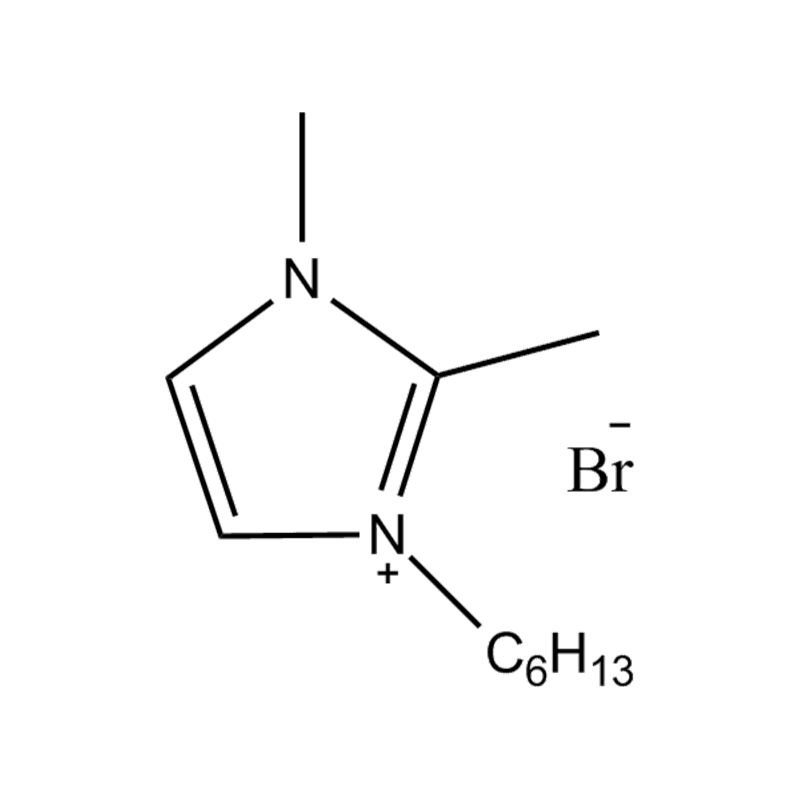
1-Hexyl-2,3-dimethylimidazolium bromide belongs to the imidazolium family of ionic liquids, distinguished by a five-membered heterocyclic ring containing two nitrogen atoms. The compound features a hexyl chain attached at the nitrogen-1 position, along with methyl substituents at both the 2 and 3 positions of the imidazolium ring. This particular substitution pattern is significant because the methyl group at the C2 position, which is typically the most acidic proton on unmodified imidazolium salts, blocks a common site of reactivity and side reactions in catalytic applications.
Key Structural Features
The bromide anion pairs with the imidazolium cation to form a salt that, depending on purity and temperature, can exist as a solid or a viscous liquid at room temperature. The hexyl chain length plays a critical role in determining the compound's hydrophobicity and viscosity, striking a balance between the shorter, more hydrophilic butyl-substituted analogs and the longer, more hydrophobic octyl or decyl variants commonly used in ionic liquid research.
Physical and Chemical Properties Relevant to Handling
Anyone working with this ionic liquid needs a clear understanding of its physical behavior to store and use it correctly. The table below summarizes typical characteristics reported for this class of compound, which can guide expectations during laboratory work.
| Property | Typical Characteristic |
| Physical State | Viscous liquid or low-melting solid |
| Solubility | Miscible with water and polar organic solvents |
| Hygroscopicity | Moderately hygroscopic; absorbs moisture from air |
| Thermal Stability | Stable up to moderate decomposition temperatures |
| Color | Pale yellow to colorless depending on purity |
Because the compound is moderately hygroscopic, it should be stored in tightly sealed containers under inert atmosphere whenever possible to prevent water uptake, which can alter viscosity and interfere with reactions where anhydrous conditions are required.
Common Applications in Research and Industry
The distinct properties of 1-hexyl-2,3-dimethylimidazolium bromide make it valuable across several specialized applications, particularly where traditional solvents fall short in stability or selectivity.
Catalysis and Organic Synthesis
In catalytic chemistry, this ionic liquid is often used as a reaction medium or co-catalyst because its blocked C2 position prevents unwanted carbene formation, which can otherwise interfere with metal-catalyzed reactions. This makes it a preferred choice in processes where imidazolium-based N-heterocyclic carbenes are not desired, allowing chemists to isolate the solvent effects of the ionic liquid from any catalytic reactivity of the cation itself.
Extraction and Separation Processes
Ionic liquids of this type are frequently studied for their ability to selectively extract metal ions, biomolecules, or organic contaminants from aqueous solutions. The hexyl chain provides sufficient hydrophobic character to create a distinct liquid phase when combined with water, enabling liquid-liquid extraction techniques that avoid the volatility and flammability concerns associated with conventional organic solvents.
Electrochemical and Materials Research
Due to its ionic nature, the compound exhibits measurable electrical conductivity, which has drawn interest for use in electrolyte formulations, particularly in exploratory battery and electrochemical sensor research. While not as widely adopted as some other imidazolium salts for commercial electrolytes, it serves as a useful comparative compound in studies examining how alkyl chain length and ring substitution affect ionic mobility.
Safe Handling and Storage Practices
Proper handling of this ionic liquid protects both the researcher and the integrity of experimental results. Following established laboratory safety protocols reduces the risk of exposure and contamination.
- Wear appropriate personal protective equipment, including gloves and safety glasses, when handling the compound in any form.
- Work in a fume hood when weighing or transferring the material to minimize inhalation exposure.
- Store the compound in a cool, dry location away from strong oxidizing agents.
- Seal containers tightly between uses to limit moisture absorption from ambient air.
- Label containers clearly with the compound name, date received, and any relevant hazard information from the safety data sheet.
- Dispose of waste according to institutional guidelines for halogenated organic salts rather than pouring down standard drains.
Comparing This Ionic Liquid to Related Imidazolium Salts
Researchers selecting an ionic liquid for a specific application often compare several structurally related compounds before settling on one. Compared to 1-hexyl-3-methylimidazolium bromide, which lacks the 2-methyl substitution, the dimethyl variant offers greater resistance to carbene formation and improved chemical stability under basic conditions. This makes it particularly suitable for applications where the researcher wants to isolate physical solvent properties without the complication of the cation acting as an active catalytic species.
When compared to shorter-chain variants such as the butyl-substituted analog, the hexyl chain provides increased hydrophobicity and higher viscosity, which can be advantageous in extraction applications but may require adjusted mixing or heating protocols during use. Selecting the appropriate chain length and substitution pattern ultimately depends on the specific balance of polarity, viscosity, and reactivity required for the intended application.
Practical Considerations for Laboratory Use
When incorporating this ionic liquid into experimental protocols, several practical factors influence successful outcomes. Viscosity can significantly affect mixing efficiency, so gentle heating is often used to improve flow and homogeneity before combining the ionic liquid with other reagents. Because the compound is hygroscopic, researchers working with moisture-sensitive reactions should consider drying the ionic liquid under vacuum with mild heating prior to use, followed by storage under nitrogen or argon.
Analytical characterization, such as nuclear magnetic resonance spectroscopy or Karl Fischer titration for water content, is commonly used to confirm purity before the compound is applied in sensitive reactions. Taking these preparatory steps helps ensure reproducible results, particularly in catalysis and electrochemical studies where trace water or impurities can significantly skew outcomes.
1-Hexyl-2,3-dimethylimidazolium bromide occupies a useful niche within the broader family of imidazolium ionic liquids, offering a stable, non-carbene-forming cation combined with practical hydrophobic character from its hexyl substituent. Whether used as a reaction medium, an extraction solvent, or a comparative compound in electrochemical studies, its structural features provide researchers with a reliable tool for applications that demand both chemical stability and tunable physical properties. Careful attention to storage, handling, and purity remains essential to fully realize its benefits in any experimental setting.