
 English
 Deutsch
 Español
 中文简体
中文简体



Content
Introduction to Adhesive Tape Antistatic Agents
Adhesive tape antistatic agents are specialized additives applied to adhesive tapes to prevent the accumulation of static electricity. In electronics manufacturing, static discharge can damage sensitive components, compromise product quality, and increase production costs. Incorporating antistatic agents into adhesive tapes is an effective method to mitigate these risks and improve operational reliability.
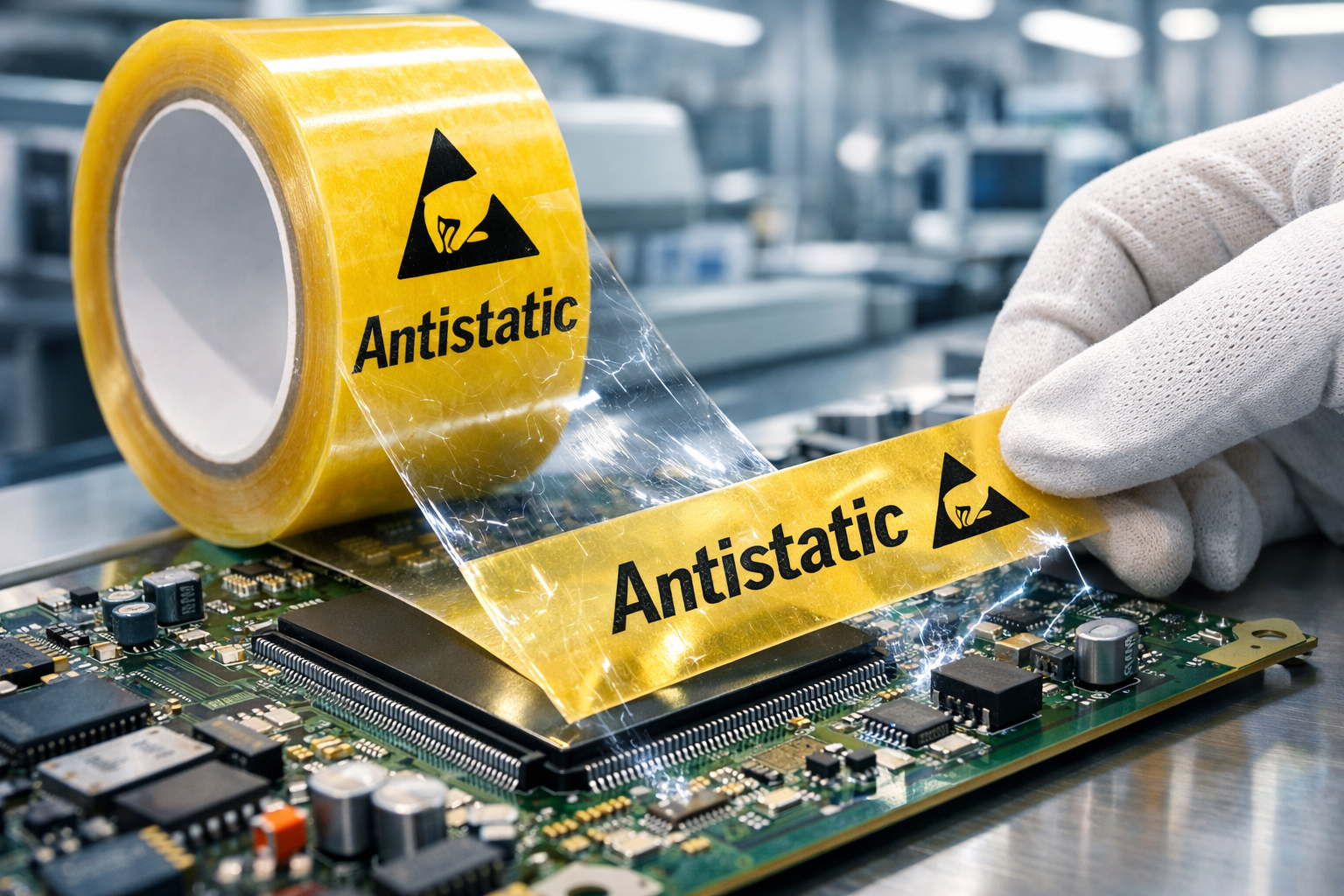
The Role of Antistatic Agents in Electronics Manufacturing
Antistatic agents in adhesive tapes perform multiple functions that directly benefit electronics production. They reduce static buildup during handling, assembly, and packaging processes. This is crucial for preventing electrostatic discharge (ESD) that can damage microchips, circuit boards, and other sensitive electronic parts.
- Minimizes the risk of component failure caused by electrostatic discharge.
- Improves safety for operators working with sensitive electronic equipment.
- Enhances product consistency by maintaining stable environmental conditions in production areas.
- Extends the lifespan of electronics by preventing hidden ESD damage.
Types of Antistatic Agents Used in Adhesive Tapes
Different antistatic agents are used depending on the tape’s base material, application environment, and performance requirements. Common categories include ionic, non-ionic, and conductive agents.
Ionic Antistatic Agents
Ionic antistatic agents work by attracting moisture from the air to create a thin conductive layer on the tape surface. This layer allows static charges to dissipate effectively, reducing ESD risks.
- Highly effective in low-humidity environments.
- Compatible with most adhesive formulations.
- Can provide long-lasting static control with proper formulation.
Non-Ionic Antistatic Agents
Non-ionic agents do not rely on moisture and are suitable for applications where humidity levels fluctuate. They offer stable static dissipation without affecting the adhesive properties of the tape.
- Maintains performance across various environmental conditions.
- Prevents interference with sensitive electronic circuits.
- Compatible with both acrylic and rubber-based adhesives.
Conductive Antistatic Agents
Conductive agents incorporate materials such as carbon black or metal oxides into the tape to create a surface that dissipates static electricity directly. These agents are highly effective in high-risk ESD areas.
- Provides immediate static discharge protection.
- Ideal for assembly lines handling microelectronic components.
- Can be used in combination with other antistatic agents for enhanced performance.
Key Benefits of Using Antistatic Adhesive Tapes
Using adhesive tapes with antistatic agents provides tangible benefits for electronics manufacturers, improving both product quality and operational efficiency.
- Protects sensitive electronic components from ESD damage.
- Reduces defect rates and rework costs.
- Supports compliance with industry ESD safety standards.
- Improves handling safety during packaging and transport.
- Enhances overall production reliability and consistency.
Comparison of Antistatic Agents for Adhesive Tapes
| Agent Type | Static Dissipation Method | Environment Suitability | Typical Applications |
| Ionic | Moisture-mediated surface conductivity | Low to moderate humidity | General electronics assembly, packaging |
| Non-Ionic | Surface charge neutralization | Fluctuating humidity | Semiconductor and PCB assembly |
| Conductive | Direct charge conduction | High-risk ESD zones | Microelectronics production, precision instruments |
Conclusion
Adhesive tape antistatic agents play a crucial role in electronics manufacturing by preventing electrostatic discharge, protecting sensitive components, and ensuring production reliability. Selecting the right type of agent based on the production environment and application requirements helps maintain high-quality output and reduces operational risks, ultimately improving both efficiency and product longevity.